
Intercultural Training: What It Costs and How to Choose
A practical guide to intercultural training for European companies expanding into Asia. Covers programme types, provider evaluation, costs, and when you actually need it versus when you don't.
Part of our Cross-Cultural Leadership series. Start with the full guide: Japanese Business Culture: A Working Guide for Europeans
- Intercultural training is the European term for what the US calls "cross-cultural training", same discipline, different naming convention
- Programme formats range from half-day awareness workshops ($500-2,000) to multi-month executive coaching ($10,000-50,000+)
- The key differentiator between good and bad providers: do they teach country-specific operational protocols, or just generic "be aware of differences" content?
- For Japan specifically, training must cover nemawashi (pre-meeting consensus), ringi (formal approvals), and high-context communication, not just etiquette
- ROI is a cost-avoidance case, not a measured return: the failure-rate and cost-per-failure figures in circulation do not trace to a primary source, so price one failed assignment on your own numbers instead
If you are an HR director at a European company expanding into Asia, you have probably been told you need "intercultural training" for your team. Maybe a relocation is coming up. Maybe a post-acquisition integration is going sideways. Maybe your people keep having meetings with Japanese or Chinese partners that end with polite smiles and zero progress.
Then this is for you. It covers what intercultural training actually involves, what formats exist, what it costs, how to evaluate providers, and, just as important, when you do not need it at all.
What Intercultural Training Is (and Is Not)
Intercultural training prepares people to work effectively across cultural boundaries. That is the one-sentence version.
In practice, it covers three things:
-
Awareness, understanding that your own business norms are culturally specific, not universal. The way you run meetings, give feedback, make decisions, and build trust are all shaped by your national and organizational culture.
-
Knowledge, learning the specific norms, expectations, and communication patterns of the culture you are working with. Not trivia about chopstick etiquette, but operational knowledge like how decisions actually get made, how hierarchy affects communication, and what silence means in a meeting.
-
Skills, practising how to adapt your behaviour in real situations. How to present a proposal to a Japanese board. How to give negative feedback to a Chinese colleague without destroying the relationship. How to negotiate timelines when your counterpart's concept of a deadline is fundamentally different from yours.
What it is not: a diversity and inclusion programme. Those have a different purpose (creating equitable workplaces within a single culture). Intercultural training is about working across cultures, typically in international business contexts, assignments, market entry, joint ventures, and cross-border teams.
It is also not a language course, although language training often accompanies it.
Why the Terminology Matters
If you are based in Europe and searching for training providers, you will encounter several overlapping terms. They all refer to roughly the same discipline, but the naming conventions differ by region and academic tradition.
Intercultural training is the dominant term in continental Europe. German providers use interkulturelles Training. Dutch providers use interculturele training. The European academic tradition (rooted in scholars like Geert Hofstede, who was Dutch) favours "intercultural."
Cross-cultural training is more common in the US, UK, and Asia-Pacific markets. American providers and researchers tend to use this term. SHRM (Society for Human Resource Management) uses it in their publications.
Cultural intelligence (CQ) refers to a specific academic model developed by Soon Ang and Linn Van Dyne. It measures four capabilities: motivation, knowledge, strategy, and behaviour. Some providers structure their programmes around CQ assessments.
Cultural competence is used more in healthcare, social work, and education contexts. The "4 C's of cultural competence", cultural awareness, cultural knowledge, cultural sensitivity, and cultural skills, originated in nursing and social work literature. Some business training providers have adopted the framework, but in a corporate context, the CQ model or corridor-specific skills training tends to be more actionable.
For practical purposes, these terms are interchangeable. When evaluating providers, focus on what they actually deliver, not what they call it. A provider using "intercultural training" and one using "cross-cultural training" may offer identical programmes.
The main reason this matters is search: if you are looking for providers in Germany or the Netherlands, search "intercultural training" or "interkulturelles Training." If you are looking in the US or UK, search "cross-cultural training." You will find different providers depending on which term you use.
The Four Programme Types
Intercultural training comes in four distinct formats, each suited to different needs and budgets.
1. Awareness Workshops
Duration: Half-day to one day Cost: $500 to $2,000 Best for: Teams starting international collaboration for the first time
These are introductory sessions that build general cultural awareness. They typically cover frameworks like Hofstede's cultural dimensions or De Mooij's marketing extensions, use case studies and group exercises, and help participants recognise their own cultural biases.
A good awareness workshop leaves people thinking differently about how they communicate and make decisions. A bad one leaves them with a list of stereotypes about bowing in Japan and small talk in America.
When to choose this: Your team has no prior international experience and needs a foundation before working with overseas partners or clients. This is a starting point, not a solution.
2. Skills-Based Training
Duration: One to three days Cost: $2,000 to $8,000 Best for: Teams actively working across cultures who need to improve specific interactions
Skills-based programmes go beyond awareness into practical application. Participants practise real scenarios: conducting performance reviews across cultures, negotiating with international suppliers, presenting to culturally diverse audiences, or managing conflict in cross-border teams.
Good providers use simulations, role-plays, and case studies drawn from their clients' actual business situations. They do not just tell you that Japanese business culture is "high context", they put you in a simulated meeting and let you experience what that means when you are trying to close a deal.
When to choose this: Your people are already working internationally and running into friction. They do not need theory, they need to handle specific situations better.
3. Country-Specific Preparation
Duration: One to two days, sometimes with follow-up coaching Cost: $2,000 to $6,000 Best for: Individuals or teams preparing for a specific assignment, relocation, or market entry
This is targeted preparation for working in or with a specific country. A Japan preparation programme, for example, would cover business card exchange protocol, meeting structure and decision-making processes, the role of after-work socialising, communication norms around disagreement and feedback, and practical logistics like housing, healthcare, and schooling for families.
The best country-specific programmes are delivered by trainers who have lived and worked in the target country for years, not by generalists who read a book about it.
When to choose this: Someone is relocating, or your company is entering a new market. The training should happen four to eight weeks before the assignment starts, not the week before.
4. Executive Coaching
Duration: Three to twelve months, typically 6 to 12 sessions Cost: $10,000 to $50,000+ Best for: Senior leaders managing cross-border teams or handling high-stakes international relationships
Executive coaching is one-on-one work with a senior intercultural consultant. It is personalised, confidential, and focused on the leader's specific challenges: managing a newly acquired Japanese subsidiary, building trust with a Chinese joint venture partner, or leading a culturally diverse global team.
This is the most expensive format, but for senior leaders whose decisions affect millions in revenue, the ROI calculation is straightforward. A single mishandled negotiation or a failed executive assignment costs far more than the coaching engagement.
When to choose this: The stakes are high, the individual is senior, and the cultural challenge is specific to their role and relationships.
When You Need It vs. When You Do Not
Not every international business situation requires formal intercultural training. Here is an honest assessment.
You probably need it when:
-
You are sending someone on an international assignment and they have never lived abroad. Ignore the flat 40% failure rate you will see quoted: measured early-return rates vary widely between studies because each one defines failure differently, and the version that circulates in the HR press does not trace back to a primary source. Cultural misalignment is nonetheless consistently cited as a contributing factor. What should drive the decision is the cost of getting it wrong, which you can price yourself from the relocation package, the salary differential, the lost productivity, and the cost of hiring a replacement.
-
You have acquired a company in another country and need to integrate teams. Post-merger cultural clashes are responsible for a significant share of M&A failures. The cultural integration work is just as important as the systems integration.
-
Your cross-border team is underperforming and you have ruled out other causes. If meetings are unproductive, decisions take too long, or trust is low between offices in different countries, cultural friction is often the underlying issue.
-
You are entering a high-context culture (Japan, China, Korea, much of the Middle East) from a low-context one (US, Netherlands, Germany, Nordics). The communication gap between these cultural clusters is wide enough that people genuinely misunderstand each other without realising it.
You probably do not need it when:
-
Your team already has significant international experience. People who have lived and worked in multiple countries have usually developed their own intercultural skills. A formal programme may bore them.
-
You are working with culturally similar markets. A Dutch company expanding to Belgium or Germany does not need intercultural training. The cultural distance is small and most professionals can handle it intuitively.
-
The engagement is short and transactional. If you are buying components from a Japanese supplier and the relationship is purely transactional with clear specifications, cultural training is overkill. When the relationship deepens into a strategic partnership, reconsider.
-
You want training as a checkbox exercise. If leadership is not committed to actually changing how people work, the training will not stick. A half-day awareness workshop ticked off for compliance purposes is a waste of money.
How to Evaluate Providers
Market-size and adoption figures for intercultural training circulate widely, but the published estimates disagree with each other by a wide margin because every analyst draws the category boundary somewhere different, and we could not trace the adoption percentages to anything primary. So take the sizing claims with caution, including ours.
What you can observe without a market report is that there are more providers every year, more variation in quality, and a real risk of buying something useless. The difference between good and mediocre comes down to a few things.
What to look for
Practitioner experience, not just academic credentials. The best trainers have lived and worked in the cultures they teach about. They have managed teams across borders, negotiated deals, and made mistakes they can share honestly. Academic knowledge of Hofstede's dimensions is necessary but not sufficient. Ask: "How long did you live in [target country]? In what capacity?"
Country-specific depth. A provider who claims expertise in 50 countries is almost certainly a generalist. Look for providers who go deep on the corridors that matter to you. If you need Japan-specific training, find someone who has spent years in Japan, speaks the language, and understands the operational realities, not someone who covers Japan as one slide in a 40-country overview.
Measurable outcomes. This is rare in the industry, but the best providers track pre- and post-training assessments, assignment completion rates, or team effectiveness scores. Ask what data they can show you from previous engagements.
Industry specificity. Cross-cultural challenges in manufacturing are different from those in financial services or technology. A provider who has worked with companies in your sector will design more relevant scenarios and case studies.
Post-training support. A single workshop creates awareness. Behaviour change requires reinforcement. Ask about follow-up coaching sessions, digital resources, or refresher workshops.
Red flags
Pure theory, no practice. If a provider talks exclusively about cultural dimensions frameworks and cannot describe specific behavioural exercises or simulations, their programme will be academic, not practical.
No industry specificity. "We work with all industries" usually means "we run the same generic programme regardless of your context."
Cannot name clients. Established providers should be able to share references or case studies (with appropriate confidentiality). If they cannot, they are either new or their clients do not want to endorse them.
Overpromising outcomes. Any provider who guarantees that their training will "eliminate cultural misunderstandings" is selling you something they cannot deliver. Cultural competence is developed over months and years, not in a one-day workshop.
Hidden pricing. As we documented in our cross-cultural training pricing guide, over 90% of providers hide their prices behind "request a quote" forms. While custom pricing is understandable for large engagements, providers who refuse to give even a ballpark range are often using information asymmetry as a sales tactic.
What Japan-Specific Intercultural Training Looks Like
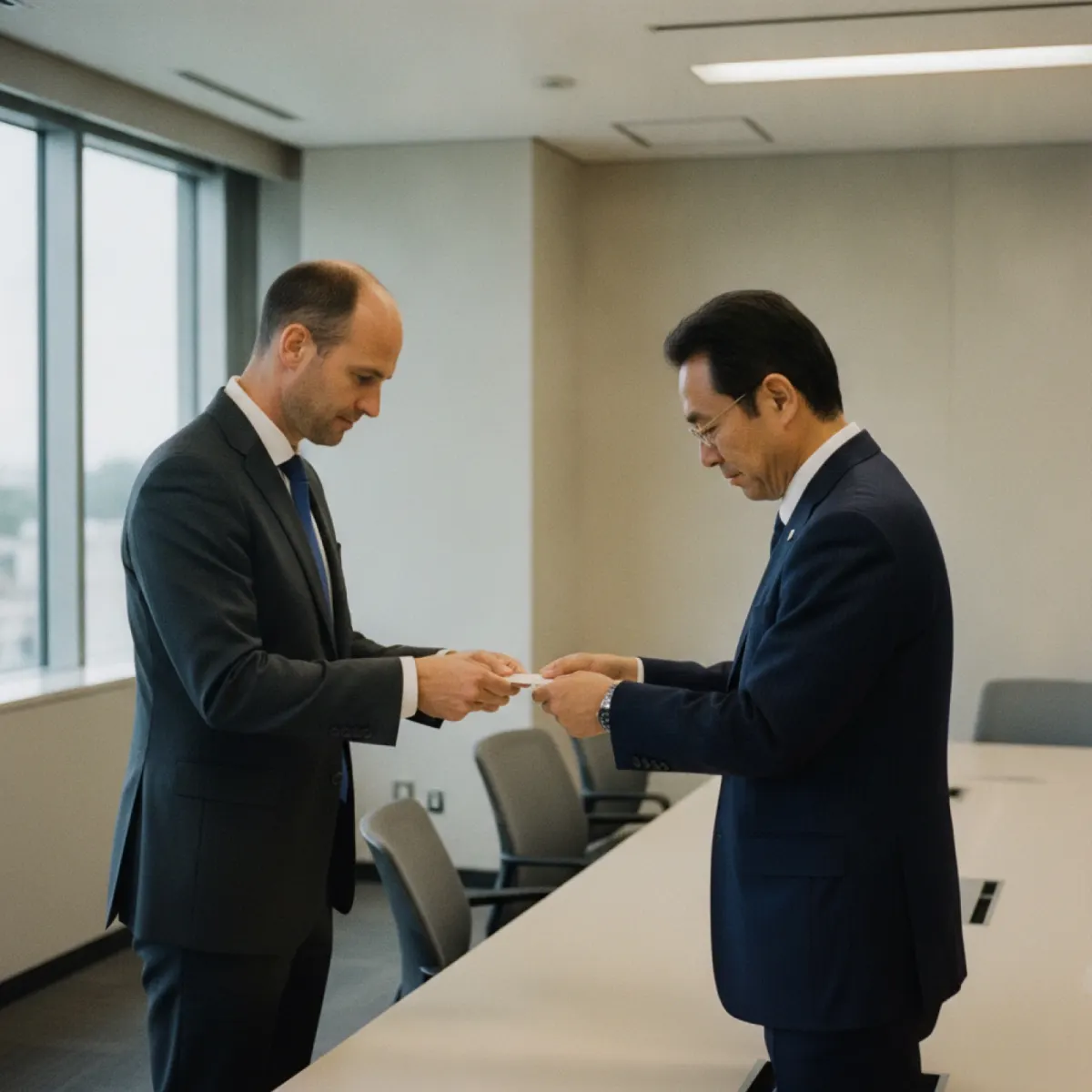
Japan is one of the most requested focus areas for intercultural training in Europe, and for good reason. The cultural distance between Western European business norms and Japanese business norms is among the widest of any major trading partner.
To put numbers on it: Geert Hofstede's research scores Japan at 95 on masculinity (competition, achievement) versus the Netherlands at 14. Japan scores 92 on uncertainty avoidance versus the Netherlands at 53. These differences are substantial, and they fundamentally shape how organisations operate.
Effective Japan-specific training goes far beyond etiquette. It covers the operational concepts that determine whether your business interactions succeed or fail:
Nemawashi (根回し), the process of building consensus informally before any formal meeting or decision. In Japanese organisations, the meeting confirms decisions that have already been reached elsewhere. If you walk into a meeting expecting to debate and decide, you have already lost. The real work happens in one-on-one conversations beforehand.
Ringi (稟議), the formal approval process where documents circulate through multiple layers of management for review and sign-off. This is why decisions in Japanese organisations feel slow to Western counterparts. Understanding ringi means understanding that when your Japanese partner says "we need to discuss internally", they are following a structured process that requires sign-off from people you may never meet.
Wa (和), harmony and group cohesion. Preserving wa means avoiding public confrontation, softening negative feedback, and reading between the lines. When a Japanese colleague says "that might be difficult," they usually mean "no." When they say "we will consider it," they may mean "we have already decided against it but do not want to say so directly."
Horenso (報連相), the communication framework of hokoku (reporting), renraku (informing), and sodan (consulting). Japanese organisations expect frequent, proactive status updates. Western managers who wait until a project is complete to report results will frustrate their Japanese counterparts, who want to hear about progress and problems in real time.
Good Japan training also covers the Hofstede dimension gaps in practical terms: what high uncertainty avoidance means for project planning and risk management, what high masculinity means for working hours and career expectations, and what high long-term orientation means for relationship building and investment horizons.
If your provider cannot explain these concepts from personal experience, find one who can.
If you are scoping a Japan-specific cross-cultural training programme right now, our cross-cultural training for Japan page covers the six programmes we run with Takashi Kawatani (Diversity Management Institute, 35+ years, 20,000+ alumni), the seven-point checklist for choosing a provider, and indicative pricing bands from EUR 800 to 25,000+. The full comparison of Japan cross-cultural training providers names competitors and scores them against the same criteria.
Costs: A Quick Reference
We published a detailed breakdown of cross-cultural training costs covering every format from online self-paced courses to multi-month organisational change programmes. Here is the summary:
| Programme Type | Typical Cost Range | Duration |
|---|---|---|
| Online self-paced platform | $30-150/user/year | Ongoing |
| Awareness workshop | $500-2,000 | Half-day to one day |
| Skills-based training | $2,000-8,000 | One to three days |
| Country-specific preparation | $2,000-6,000 | One to two days |
| In-house workshop (instructor-led) | EUR 1,500-5,000/day | Per day |
| Executive coaching | $200-600/hour | 3-12 months |
| Multi-month programme | $15,000-100,000+ | 3-6 months |
For most European mid-size companies, the first meaningful investment is a one- or two-day skills-based workshop or country-specific preparation. Budget EUR 2,000 to 4,000 for a solid programme with a qualified specialist.
For the full pricing analysis, including what drives costs up and down and what to ask providers before signing, see our pricing guide.
The Silkdrive Approach
Silkdrive operates at the intersection of Europe and Asia, with particular depth in the EU-Japan corridor. The Netherlands is the number one EU investor in Japan (JPY 3.69 trillion in cumulative FDI), and Japan is the Netherlands' largest Asian investment source. Over 610 Japanese companies operate in the Netherlands. This bilateral relationship is our home ground.
Rather than delivering all training in-house, we work through a curated network model:
Expert network. Our expert directory lists 21 specialists across Japan business, cross-cultural training, market entry, and organisational development. Each expert has been vetted for practitioner experience, not just academic credentials.
Kawatani partnership. Our anchor training partner, Kawatani Corporation, brings over 35 years of experience and more than 20,000 alumni across their intercultural programmes. They provide the depth and scale for large-format training engagements.
Japan executive coaching. For senior leaders working through complex cross-cultural relationships, we offer one-on-one coaching that combines cultural intelligence with strategic business advisory. This coaching is tailored to the specific deals, teams, and relationships the executive is managing, well beyond generic cultural awareness.
Diagnostic approach. We start by understanding what you are actually trying to achieve, market entry, post-acquisition integration, team alignment, individual assignment preparation, and then match you with the right expert and format. Sometimes the answer is a two-day workshop. Sometimes it is a six-month coaching engagement. And sometimes it is an honest conversation about whether you need training at all.
Explore our full training programmes or browse the expert directory to find specialists relevant to your corridor.
Frequently Asked Questions
What is the difference between intercultural and cross-cultural training?
In practice, there is no meaningful difference. "Intercultural training" is the preferred term in continental Europe (especially Germany, the Netherlands, and Scandinavia), while "cross-cultural training" is more common in the US, UK, and Asia-Pacific. Both refer to programmes that prepare people to work effectively across cultural boundaries. When evaluating providers, focus on what they deliver, not what they call it.
How much does intercultural training cost?
Costs range widely depending on format and depth. Online self-paced courses run $30 to $150 per user per year, landing around $50 for a mid-size company buying seats in bulk. In-house workshops typically run EUR 1,500 to 5,000 per day. Executive coaching ranges from $200 to $600 per hour. For a detailed breakdown, see our cross-cultural training pricing guide.
How long does an intercultural training programme take?
A single awareness workshop takes half a day to one day. Skills-based training runs one to three days. Country-specific preparation is typically one to two days, ideally scheduled four to eight weeks before an assignment or market entry. Executive coaching engagements span three to twelve months. The right duration depends on your situation, a team entering a new market needs more depth than a team refreshing existing skills.
Do we need intercultural training for Japan specifically?
If you are entering the Japanese market, acquiring a Japanese company, or sending staff to work in Japan, yes. Japan ranks among the highest-context business cultures globally, and the operational norms, nemawashi, ringi, horenso, are fundamentally different from Western European practices. Generic "working across cultures" programmes do not cover Japan with enough depth. Look for providers with direct Japan experience and the ability to teach operational concepts, not just etiquette.
Can intercultural training be delivered online?
Yes, and it is increasingly common. Virtual half-day sessions are typically priced at 50% to 60% of in-person full-day rates, making them cost-effective for distributed teams. Online self-paced platforms (Aperian, Country Navigator, CultureWizard) offer scalable baseline training. That said, skills-based training with simulations and role-plays tends to be more effective in person, where participants can read body language and practise face-to-face interactions. The best approach for most organisations is a blend: online platforms for broad awareness, in-person or live virtual sessions for targeted skills development.
How do I measure the ROI of intercultural training?
Direct ROI measurement is rare in this industry, but there are proxies. Track your own international assignment completion rate over time rather than benchmarking it against a published global failure rate, because those rates vary widely between studies and the most-quoted one does not trace to a primary source. Monitor team effectiveness scores for cross-border teams before and after training. Ask participants to self-assess confidence and competence at 30, 60, and 90 days post-training. For market entry scenarios, track time-to-first-deal and partner satisfaction. The strongest ROI case is cost avoidance: price one failed assignment for your own organisation, counting relocation, salary differential, replacement hiring, and lost client relationships, and it will dwarf the cost of any training programme.
Stay Ahead in Cross-Cultural Marketing
Get monthly insights on international growth strategies, cultural intelligence, and digital marketing trends delivered to your inbox.
We respect your privacy. Unsubscribe at any time.