
Webinar Marketing in Japan: Tactics, Platforms, Partners
How to use webinars as a B2B marketing channel in Japan. Platforms (Yahoo Japan, LINE, LinkedIn JP), format adaptation, scheduling, localisation, APPI compliance, and the Japan-based agency partners who can execute in-country.
Part of our Advertising and Paid Media in Japan series. Start with the full guide: Advertising in Japan: The Channel Set and What It Costs
- Webinars can work as a B2B marketing channel in Japan, but the European playbook needs significant adaptation before they do
- Platform mix is different: Yahoo Japan, LinkedIn JP, LINE Ads, industry newsletters, and JETRO co-branding, not just LinkedIn-default Europe
- Format adaptation: 90-minute sessions are standard, framing is more formal, live Q&A is rare, follow-up tail runs 6 to 12 weeks aligned with nemawashi and ringi timescales
- Compliance: APPI applies to Japanese attendee data, not GDPR; the registration page needs an APPI-compliant Japanese-language privacy notice
- Japan-based agencies (Edamame Japan, Tribal Media House, eMarketing Japan) handle in-country execution; Silkdrive runs the EU-side and refers in-country work to partners
- First step is usually a discovery call to confirm whether webinars are the right tactic for your Japan GTM at all, sometimes another channel delivers more
Webinars can work as a B2B marketing channel in Japan. They often don't, when European teams run the European playbook in a market where buyers discover, evaluate, and decide on different cadences. This is the tactical guide, the platforms, the format adaptation, the scheduling, the compliance regime, and the honest read on when webinars are the wrong tactic for your Japan go-to-market.
This article is written by Silkdrive, a Netherlands-based cross-cultural marketing agency that runs webinars on the Japan market through the EU-Japan Centre for Industrial Cooperation and uses webinars as a B2B channel in its own marketing. We refer in-country execution to trusted Tokyo partners and will tell you honestly when one of them is a better fit.
What do you need?
- The tactical playbook, platforms, format, scheduling, localisation, compliance
- Japan-based agencies who execute in-country, Tokyo specialists for list-building, registration, and Japanese-language delivery
- Should you even be running webinars in Japan?, the honest read on when webinars fit and when another channel delivers more
- Book a Discovery Call, scope as a Silkdrive engagement or get referred to a partner
Different question? If you came here looking for educational webinars about how to enter Japan, the EU-Japan Centre programme, Silkdrive's Japan Market Entry Webinar and Workshop, cross-cultural training, see Japan Market Webinars. That article handles the educational side. This one handles the channel-and-agency side.
The tactical playbook
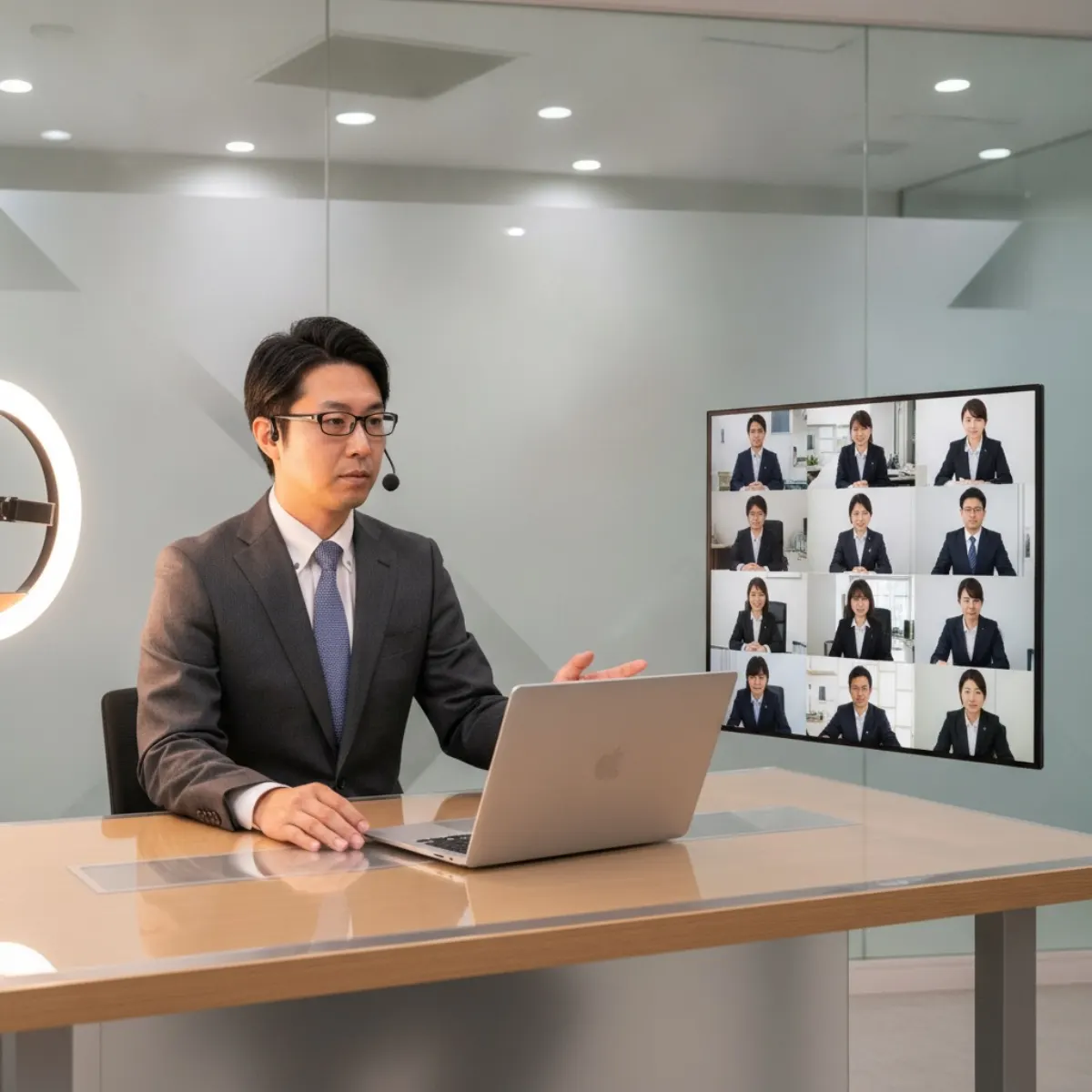
European webinar defaults, Zoom Webinars, Hopin, Demio, Livestorm, work fine for the delivery side. The acquisition side is where the playbook changes.
Platform reality
Japanese B2B buyers do not discover webinars the same way:
- Yahoo Japan ads remain a major B2B channel. Yahoo Japan remains a major portal, display, and search channel in ways that look strange to Europeans accustomed to Google's dominance. Yahoo's webinar promotion inventory is competitive with Google's for B2B reach in Japan.
- LinkedIn ads work, but reach is narrower than in Europe. LinkedIn penetration among Japanese executives is meaningful but lower than equivalent EU senior cohorts. Use it; do not expect it to carry the campaign alone.
- LINE Ads Platform for SMB and mid-market targeting. LINE has near-universal Japanese adoption, and LINE for Business is widely used; LINE Ads gives B2C-flavoured reach that occasionally surprises in B2B contexts.
- Industry-specific email newsletters and association partnerships carry disproportionate weight. The Japan B2B information ecosystem is more newsletter-driven and less LinkedIn-driven than Europe. Partnering with sectoral associations or industry-vertical newsletters for promotion often outperforms paid social.
- JETRO co-branding when content qualifies. JETRO sometimes co-promotes investment-relevant webinars; for European companies entering Japan, this is essentially free reach to a vetted Japanese buyer audience.
Format adaptation
European webinars tend to be 45 to 60 minutes with 15 to 30 minutes of Q&A and a clear sales handoff at the end. Japanese B2B webinars often run differently:
- Longer. 90 minutes is common; some run 2 hours. Information density is expected; truncated decks signal lack of seriousness.
- More formal in framing. A clear agenda, named speaker credentials, organisational affiliations, and structured slides matter more than personable delivery. Japanese B2B audiences are reading the seriousness signals.
- With muted live Q&A. Live questions from Japanese attendees are rare. Build in a written Q&A function with a moderator who can read aloud submitted (often anonymous) questions rather than expecting hands-up.
- With a longer follow-up tail. Japanese B2B decisions move on nemawashi and ringi timescales, which means the follow-up cadence after the webinar runs over weeks to months, not days. Plan a 6 to 12 week nurture sequence with sector-specific content, not a 3-touch sales sequence.
Scheduling
Japan business hours are UTC+9. For European companies running webinars to Japanese audiences:
- Tokyo 10:00 to 11:00 JST (early morning Europe) catches Japanese attendees at start-of-day before meetings.
- Tokyo 16:00 to 17:00 JST (mid-morning Europe) catches end-of-day attention.
- Avoid 12:00 to 13:00 JST (Japanese lunch).
- Avoid Golden Week (late April to early May), Obon (mid-August), and the New Year holiday (late December to early January). Attendance collapses.
For dual-audience European-and-Japanese webinars, 09:00 JST / 02:00 CET is the only practical overlap. Most European companies running Japan webinars choose either (a) Japan-only with European presenters delivering early morning their time, or (b) two parallel sessions with the same content recorded once and presented twice.
Localisation depth
The minimum:
- Slides translated into Japanese. Even if the presenter speaks English, slides in Japanese signal seriousness and let attendees who follow English with effort lean on the slides.
- Live translation or interpretation for the Q&A portion. Pre-recorded sessions can use professional Japanese voice-over.
- Japanese-language landing page for registration. Form fields in Japanese, last-name-first ordering, postal code field, company name in Japanese script.
- Email confirmations and reminders in Japanese. A confirmation email in English from "noreply@" sends a low-effort signal and undermines the trust the webinar itself is meant to build.
APPI compliance
For European companies running webinars that capture data from Japanese attendees, the relevant law is APPI (Act on the Protection of Personal Information), not GDPR. APPI is broadly GDPR-aligned but has specific consent and notification requirements. The webinar registration page should have an APPI-compliant privacy notice in Japanese. Silkdrive's EU SaaS Japan: GDPR ↔ APPI guide covers this in detail.
Japan-based agencies who execute in-country
If what you want is a Japan-based agency to run your webinar marketing campaign for you, list-building, promotion, registration, delivery, Japanese-language follow-up, you are looking for in-country specialists.
Silkdrive is Netherlands-based and does not compete on in-Japan execution. We refer that work to trusted Tokyo partners. Three credible options:
- Edamame Japan, Tokyo-based event and webinar marketing specialist. Strong on inbound campaigns for Western companies entering Japan, with native-language production and follow-up.
- Tribal Media House, larger Tokyo agency with strong B2B digital marketing capabilities including webinar campaigns.
- eMarketing Japan, smaller specialist focused on lead-generation campaigns including webinar formats.
Silkdrive's complementary positioning: EU-side webinar marketing for the EU-Japan corridor. We run the European audience side of the campaign, promotion to European buyers, content adaptation for European companies entering Japan, EU-Japan Centre co-marketing, while a Tokyo-based partner runs the Japan-side execution. This works particularly well for European SaaS, deep-tech, and B2B companies whose Japan GTM starts with European-side education and ends with Japanese-side activation. We make the introduction to the partner who fits your sector and stage; the partner runs the in-country work and bills you directly.
Should you even be running webinars in Japan?
Webinars are one tactic of many for Japan B2B. Sometimes they are the right tactic. Sometimes a partner relationship with a Japanese distributor, a JETRO-introduced channel, a sector-specific event sponsorship, or direct in-language outreach delivers more for less effort.
Silkdrive runs customer-discovery sessions before scoping any Japan webinar campaign for exactly this reason. The discovery call covers:
- The actual GTM situation. What product, what stage, what target customer in Japan, what evidence so far, what timeline, what budget.
- The other channels you have already used. What worked, what did not, what you have not tried.
- The decision-maker map for your buyer. Often the webinar audience and the decision-maker are not the same person; the cadence of getting from one to the other matters more than the webinar itself.
- The honest read on whether webinars fit. Sometimes they do. Sometimes a single sector-specific webinar pulls more qualified pipeline than a quarter of LinkedIn ads. Other times the answer is "skip webinars for now, do these two things first."
The Silkdrive engagement starts with the discovery call. The next step depends on what comes back. For teams ready to commission a full campaign, we scope it as an agency engagement. For teams that need to go deeper on the tactic before committing budget, we recommend the Japan Market Entry Workshop, it covers the marketing-channel work (including webinars), the sales motion, the negotiation conventions, and the cross-cultural fluency as one programme, customised to your team and sector.
Book a Discovery Call
If you are considering webinars as part of your Japan GTM, the right starting point is a discovery call. 30 minutes. We will map your situation, give an honest read on whether webinars fit, and recommend the next step, whether that is a Silkdrive agency engagement, a Tokyo-based partner referral, the Japan Market Entry Workshop, or something else entirely.
If you are ready to go deeper on the tactic and want structured training rather than agency execution, the Japan Market Entry Workshop is the right format. Half-day to multi-session, customised, covers marketing channels (including webinars), sales motion, negotiation, and cross-cultural fluency in one programme.
Related reading
- Japan Market Webinars: Learn How to Go to Market, the educational side: EU-Japan Centre webinars, Silkdrive's Japan Market Entry Webinar and Workshop, cross-cultural training
- Japan Market Entry Webinar, Silkdrive's structured webinar for European companies entering Japan, delivered through the EU-Japan Centre
- The EU-Japan Centre: Free Support for European Companies in Japan, the free public webinars, Market Access workshops, and Step in Japan office space the Centre runs, and where paid training fits
- The Real Cost of Entering the Japanese Market, budget framework that webinar campaigns plug into
- Yahoo! Japan vs Google for EU Brands, the search/display landscape that shapes webinar promotion
- EU SaaS Japan: GDPR vs APPI, privacy compliance for capturing Japanese attendee data
- Cross-Cultural Training for Japan, the cultural readiness layer that webinar attendees become buyers through
Last updated: 2026-06-04.
Stay Ahead in Cross-Cultural Marketing
Get monthly insights on international growth strategies, cultural intelligence, and digital marketing trends delivered to your inbox.
We respect your privacy. Unsubscribe at any time.