The quick answer: The Growth Hacking Process
(1) Analyze: What's your baseline performance across acquisition, activation, retention, revenue, and referral? (2) Generate ideas: Brainstorm growth experiments informed by data, customer research, and competitive analysis. (3) Prioritize: Rank ideas by potential impact and ease of testing. Run the highest-impact, fastest-test experiments first. (4) Execute: Run the test, measure the result. (5) Analyze: Did it move the metric? Why? (6) Repeat: Feed learnings back into the next round. The cycle becomes your operating rhythm.
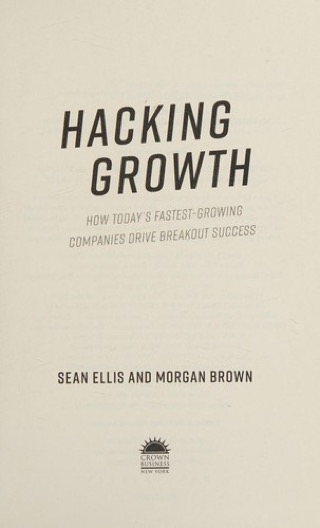
Why Hacking Growth matters for growth marketers
This is the operational blueprint for structuring a growth team and running experiments at velocity. Ellis and Brown show how to move from ad-hoc marketing to a systematic process that compounds learning over time. If you're serious about growth, this book defines what "serious" looks like.
The top lessons growth marketers take from it
- 1
Cross-functional growth teams beat siloed marketing departments
Product, engineering, data, and marketing working in one tight group discover and execute growth ideas faster than if marketing sits alone. The best growth insights come from conversations across functions, not from one department's report.
- 2
Run high-tempo experiments with minimum viable tests
You don't need a perfect test. You need a testable hypothesis and a way to measure it quickly. The goal is learning velocity, not statistical perfection. Run 5 cheap experiments a week instead of 1 expensive one per month.
- 3
The growth equation is your scoreboard
Acquisition + Activation + Retention + Revenue + Referral = Growth. Every team member should understand how their work impacts these five metrics. This alignment makes priority-setting clearer and reduces politics around what to work on next.
When to read it
Once you have product-market fit and are ready to formalize your growth process. Use this to structure your team and establish the experimental discipline that separates consistent growers from one-hit wonders.