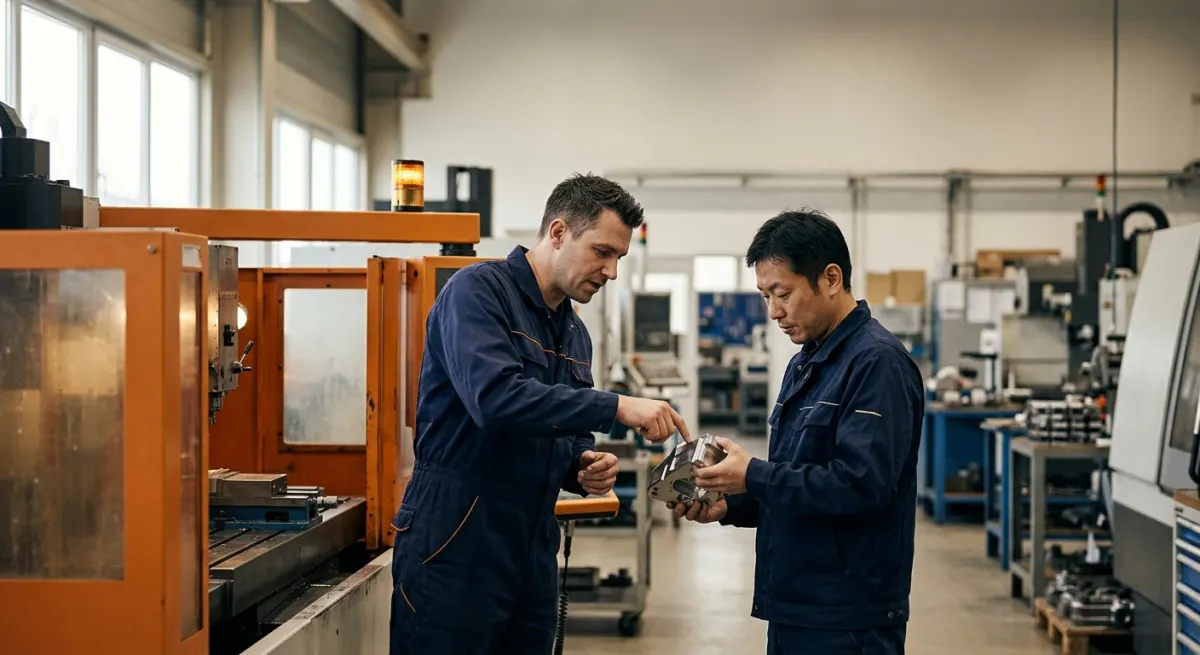
Doing Business in Japan from Germany: A Corridor Guide
Germany is the EU's largest export economy and one of Japan's most active European trade partners. This guide maps the German business-culture starting point against Japanese expectations, where German operators stumble, sector angles for automotive, machinery and chemicals, and a practical entry-readiness plan.
Part of our EU-Japan Market Entry series. Start with the full guide: Japan Market Entry Guide for European Companies [2026]
- Germany is the EU's largest export economy and runs one of the most active EU-Japan trade lanes after the Netherlands; this corridor is real whitespace and German operators are well represented in Japan through automotive, machinery and chemicals
- German business culture starts much closer to Japan than most EU peers on precision, preparation and respect for hierarchy, which is why German firms often do well; the gap that catches them out is communication style, not work ethic
- The single most expensive German habit in Japan is Klartext (plain-speaking) feedback; a flat "this does not work" reads as aggression where Japanese communication is the highest-context in the world
- Sachlichkeit (matter-of-factness) and the engineering-led Mittelstand operating model map well onto Japanese quality expectations, but the slow-quote, spec-first sales motion still needs a relationship layer that German teams tend to skip
- The fix is to keep being German while translating a precise, hierarchical, engineering-led culture into a high-context, consensus-paced one, and the deltas are specific and learnable
Most guides to doing business in Japan are written from a US perspective, and a smaller set from a Dutch one because the Netherlands runs the oldest and largest European corridor into Japan. If you are running a German company, neither fully fits you. Your starting point is different, your strengths are different, and the specific places where you will stumble are different too.
This guide is written for German operators: the export manager at a Mittelstand machinery firm, the country lead at an automotive Tier-1 supplier, the chemicals sales director weighing a Japanese qualification cycle. Germany is the EU's largest export economy and runs one of the most active EU-Japan trade lanes after the Netherlands. That makes this corridor real, underserved territory, not a niche. And it makes the German-specific adaptation worth getting right, because the gap between German and Japanese business culture is narrower than most EU pairs on some axes and wider than people expect on the one that matters most.
The good news first: German business culture starts closer to Japan than almost any other European culture. The hard news: the place where Germany and Japan diverge most sharply, communication style, is the place that quietly decides outcomes. This guide maps both.
Germany starts closer to Japan than almost any EU culture on precision and hierarchy. The gap that catches German operators out is communication, not work ethic.
The German starting point: where you already have an edge
Before the deltas, give German firms credit for what travels well. Three German business traits map onto Japanese expectations more cleanly than the equivalent traits in most other European cultures.
Precision and preparation
German business culture rewards thoroughness, documentation, and getting the detail right before you commit. So does Japan. Japanese B2B decision makers are detail-focused and expect claims to be supported with case studies and survey results rather than confident assertion.1
A German team that arrives with a properly engineered proposal, full specifications, and evidence is speaking a language Japanese buyers respect. The instinct to over-prepare, which can read as excessive in faster Anglo markets, is closer to the baseline in Japan.
Sachlichkeit: matter-of-fact focus on the issue
Sachlichkeit, the German preference for keeping discussion factual, objective, and focused on the matter at hand rather than on personalities or theatrics, has a real affinity with the Japanese emphasis on substance and quiet competence. Neither culture is impressed by the hard-charging, personality-driven sales style that works in parts of the US market. Both want to see that the work is sound. The caution, which we return to below, is that German Sachlichkeit applied to negative feedback becomes bluntness, and that is where it stops helping.
Respect for hierarchy and engineering authority
German organisations respect hierarchy and technical authority. Titles, credentials, and the chain of seniority carry weight. That instinct aligns with Japan, where the respect a person enjoys depends primarily on age, status, and rank, and where matching the seniority of your delegation to your counterpart's is a basic signal of how seriously you take the relationship.2
There is a useful nuance here that Erin Meyer's research makes explicit: hierarchy in leadership and the speed of decision-making are independent axes. Germany is hierarchical on the leading dimension yet runs a consensus-oriented decision-making process, not a pure top-down one.3
This matters because it means German managers already understand that being hierarchical and being consensual are not contradictions, which is the exact mental model needed to read Japan correctly.
Where Germany and Japan actually diverge
Now the gap. The defining difference is not effort, quality, or hierarchy. It is how directly a culture says what it means, especially when the message is negative.
On Edward T. Hall's high-context versus low-context continuum, Germany and Japan sit near opposite ends. Hall himself used Germans and Japanese as the textbook exemplars of the two poles: Germans as a low-context culture where meaning is carried explicitly in the words, Japanese as a high-context culture where the setting, the relationship, and the manner carry as much meaning as what is said.4
Erin Meyer's later work puts a sharper point on it: Japan is the highest-context culture in the world on her communicating scale.3
For a low-context, plain-speaking German culture, that is the widest possible distance to travel on the one axis that decides whether a relationship survives the first meeting.
Klartext: the most expensive German habit in Japan
German business prizes Klartext, plain talk. Saying clearly that something will not work, that a figure is wrong, or that a plan has a flaw is considered honest, efficient, and respectful of everyone's time. In Germany, blunt negative feedback is a professional courtesy.
In Japan it is close to the opposite. Japanese communication is built to protect wa (harmony) and face, and indirectness is the default rather than the exception, not occasional politeness.5
A flat "this does not work," delivered in a German register, reads in a Japanese room as an attack on the person and the group, not a clean comment on the proposal. The content may be correct. The delivery breaks the relationship.
The fix is to move the same content into a high-context register while still giving the feedback. "This does not work" becomes "this may be difficult; could we study it further together?" The Japanese side hears the real signal, the proposal has a problem, without anyone losing face. German teams often resist this as evasive or dishonest. It is the same information, encoded for a different system.
Decision pace: hierarchical, but slow and bottom-up
German managers know that consensus takes time; the German decision process is consensual under a hierarchical structure. Japan takes this further in a way that surprises even prepared Germans. Japan is a remarkable exception to the usual pattern: although strongly hierarchical, it is one of the most consensual societies in the world, making decisions bottom-up through the ringi system.3
A German operator who assumes "hierarchical equals the senior person decides quickly" will misjudge the entire tempo. The senior person in the room may have the least visible role in the decision, which is being assembled below and around them through nemawashi (informal pre-alignment) long before any meeting. For the operational detail, see our guides to how Japanese companies actually make decisions through nemawashi and the formal ringi approval process that follows it.
Trust and the relationship layer
German engineering confidence can lead to a spec-first sales motion: the product is excellent, the data proves it, the buyer should see that. Japanese buyers do not work that way. What they are uncomfortable with is ambiguity rather than risk, and the distinction changes what you do about it: ambiguity is answered with more information, risk with a smaller ask. So they want stability, a track record and evidence of long-term commitment before they commit, and they may be reluctant to pursue a joint task until a relationship has been established.1
The German product may be the best in the room. It still loses to a competitor who invested in the relationship if the German team treated relationship-building as overhead to be minimised.
The Germany-Japan contrast table
Here is the German-specific delta. Each row names a business dimension, the German default, the Japanese expectation, and the adjustment a German operator should make. The deltas are grounded in the high-context/low-context and consensus research above and in Hofstede's dimension scores, where Germany and Japan are close on some axes and far on others.
| Dimension | German default | Japanese expectation | Adjustment for German operators |
|---|---|---|---|
| Negative feedback | Klartext: state the flaw plainly and directly | Indirect; protect harmony and face | Largest delta: encode the same message in a high-context register, e.g. 'this may be difficult' |
| Communication context | Low-context: meaning is in the words | Highest-context culture in the world | Read the setting, silence and manner; do not take a polite non-answer as a yes |
| Decision pace | Consensual but reasonably efficient | Slow, bottom-up consensus via nemawashi and ringi | Do not push for an in-meeting yes; budget months and resource a relationship phase |
| Hierarchy | Respected; technical authority counts | Strongly respected; tied to age, status, rank | Small delta: match delegation seniority precisely; mind seating and greeting order |
| Preparation and detail | Thorough; documentation-led | Detail-focused; wants evidence and track record | Small delta: this is a strength, lead with case studies and proof |
| Sales motion | Spec-first; the product proves itself | Relationship-first; trust precedes the task | Medium delta: add an explicit trust-building phase before the technical pitch |
| Risk posture | Engineered confidence; manage risk with rigour | Risk-averse; wants stability and long-term commitment | Signal durability and continuity, not just performance |
A few notes on reading this table. The small deltas (hierarchy, preparation) are German strengths, and they are why German firms often outperform other EU entrants. The large deltas (negative feedback, decision pace, sales motion) are simply the places where a low-context, efficiency-minded culture has the most translating to do, not weaknesses of German business culture. None of the adjustments asks a German operator to become less rigorous or less German. They ask for the same rigour, re-encoded.
For the broader cultural frame behind these scores, our explainer on Hofstede's cultural dimensions covers why two cultures can be close on hierarchy and far apart on communication, and our guide to honne and tatemae explains the gap between stated and real positions that German directness so often misreads.
Sector angles: where German strength meets Japanese expectation
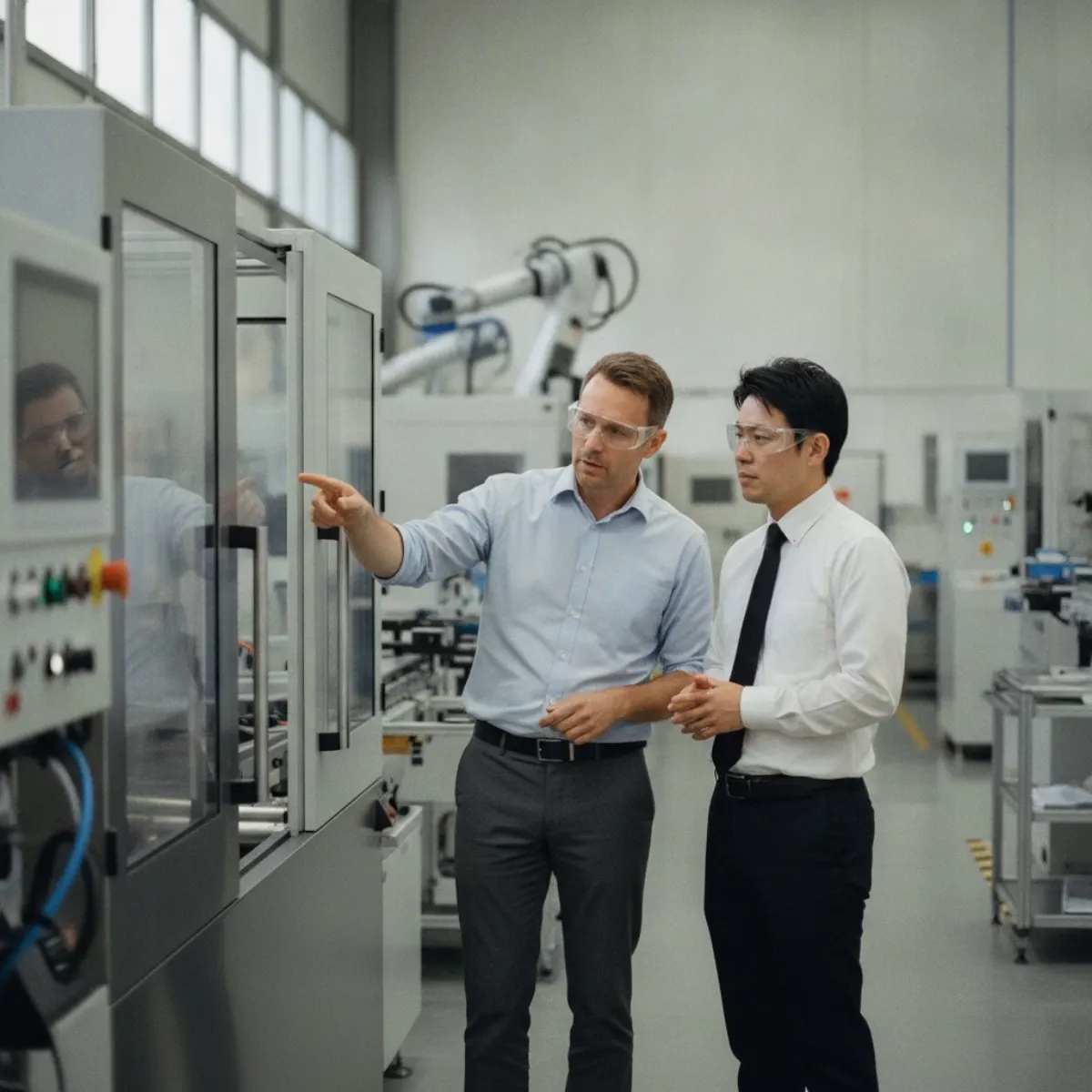
The corridor is not abstract. German trade with Japan concentrates in a few sectors where German firms compete at the top end and Japanese buyers hold high standards. In each, the product is rarely the constraint. The relationship and communication layer is.
Automotive and components
Automotive is the most visible German-Japanese overlap, and the most competitive, because both countries field premium global brands and deep supplier ecosystems. German marques carry genuine premium standing in Japan, and German Tier-1 and Tier-2 suppliers serve Japanese OEMs that demand exceptional reliability and quality consistency.
The German edge here is real engineering credibility. The trap is twofold. First, Japanese automotive buyers run long qualification and audit cycles that reward patience and punish the urgency German quarterly planning instils. Second, the supplier relationship in Japanese automotive is genuinely long-term and relational, closer to partnership than transaction; a German supplier who optimises each quote in isolation, rather than investing in the relationship, will lose to a competitor who plays the long game. Match Japanese reliability expectations on the product, and match Japanese relationship expectations on the commercial side.
Industrial machinery and precision engineering
This is the heartland of the German Mittelstand, the family-owned, mid-market, globally specialised manufacturers Hermann Simon called the Hidden Champions.
These firms supply equipment Japanese manufacturers value precisely for its reliability and precision, and the fit is unusually good. A Mittelstand firm's instinct, to build a durable supplier relationship over years, with patient capital and a multi-generational horizon, is structurally close to how Japanese firms prefer to buy. The Japanese demand for stability, track record, and long-term commitment is something a Hidden Champion can credibly meet, often better than a fast-growth competitor.
The adaptation for Mittelstand firms is narrower than for most entrants: keep the operating model, fix the communication style. The slow-quote, spec-led sales motion needs an explicit relationship layer in front of it, and the Klartext feedback habit needs the high-context translation described above. The business model already fits; the conversational register does not yet.
Chemicals and materials
German chemicals firms enter a market defined by long technical qualification cycles, exacting specifications, and high switching costs once a material is designed in. This rewards exactly the patience and technical depth German firms bring. A multi-year qualification process is a moat once cleared for a firm that thinks in decades.
The risk in chemicals is the same relationship-versus-spec tension. Technical superiority does not automatically convert a Japanese buyer who needs to trust continuity of supply and the durability of the partner. German firms should foreground stability, succession, and long-term commitment alongside the technical case.
In every German strength sector, the product is rarely the problem. The constraint is the relationship and communication layer around the sale.
Entry-readiness: a practical sequence for German operators
Strategy aside, here is a concrete sequence. It assumes a German firm with a strong product and limited Japan-specific cultural experience, the typical Mittelstand or mid-market profile.
-
Map your delta before your market. Start with the contrast table above and identify which adjustments are largest for your specific team. For most German firms the priority is negative-feedback phrasing and decision-pace expectations, not hierarchy or preparation, which you likely already do well.
-
Resource a relationship-building phase explicitly. Put a named budget and timeline against the months of meetings that precede an order. If it is invisible in the plan, your quarterly-reporting instinct will treat it as failure and you will push too early. Initial meetings that produce no order are investments, not wasted trips.
-
Calibrate the delegation, not just the deck. Match the seniority of who you send to who you will meet; sending juniors to meet seniors caps every future meeting. Prepare attendee research, hierarchy, and seating order with the same rigour you apply to the technical proposal.
-
Rewrite your feedback vocabulary in advance. Pre-script high-context substitutions for your most common Klartext phrases so that "this is wrong" and "this will not work" do not surface raw in the room. This single change prevents the most common and most damaging German error.
-
Lead with evidence and continuity. Japanese buyers want detail, track record, and proof of long-term commitment. Foreground case studies, reliability data, and your firm's stability and succession, alongside the product case.
-
Prepare your team, then go. Structured cross-cultural preparation pays off most when a team is about to host or visit a Japanese delegation, enter the market, or build a multi-meeting partnership. The cost of preparation is trivial against the cost of a stalled first negotiation.
For the wider EU context around timing, cost, and the trade framework, see our complete guide to Japan market entry for European companies, the real cost of entering the Japanese market in EUR terms, and what the EU-Japan EPA actually changed for European exporters. German operators expanding more broadly may also find our international business expansion guide useful for the cross-border playbook, and the common EU-Asia communication mistakes piece a fast pre-flight checklist.
The corridor in EU context
Germany's Japan corridor sits inside a larger European picture. The Netherlands runs the oldest and largest EU-Japan relationship, a 400-year, $190 billion bilateral corridor, and German firms can learn from how Dutch companies have worked through the same cultural distance; our Netherlands-Japan business corridor guide lays out that relationship in full. The two EU starting points differ: Dutch directness and flat hierarchy create the largest communication delta of any EU country, while Germany's hierarchy-respecting, precision-led culture starts closer to Japan on several axes but shares the Dutch problem of blunt feedback. For a country-by-country protocol breakdown that includes the German delta alongside the Dutch and French, see our Japanese business etiquette guide for European executives.
The EU-Japan Economic Partnership Agreement, in force since 1 February 2019, removed tariffs on around 99% of EU exports to Japan, which directly benefits German manufactured goods including automotive components and machinery. But the EPA removed tariffs, not cultural friction. A German firm that can now ship machinery to Japan tariff-free still has to win a relationship-based, consensus-paced buying process. The agreement created the opportunity. Closing it is cultural work.
What this means for your company
Germany begins this corridor with advantages most European entrants would envy: precision, preparation, respect for hierarchy, an engineering-led Mittelstand operating model, and a patient, long-term temperament that maps onto Japanese expectations of stability and commitment. The product is rarely the problem.
The work is concentrated and learnable. Translate Klartext feedback into a high-context register. Resource the relationship phase instead of minimising it. Read Japan's hierarchy as slow and bottom-up, not fast and top-down. Lead with evidence and continuity. None of this asks a German firm to be less German. It asks for the same rigour, re-encoded for the highest-context business culture in the world.
That re-encoding is exactly what cross-cultural preparation delivers, and it is the difference between a German product that should win in Japan and one that actually does.
If your team is preparing for a Japan engagement and you want to map your German-to-Japanese deltas before the first meeting, book a call with Silkdrive to scope a calibrated programme, or browse corridor specialists in our expert directory.
Frequently Asked Questions
Is Germany a significant trade partner for Japan?
Germany is the EU's largest export economy and one of Japan's most active European trade partners, with the most established Japan trade lane after the Netherlands. German strength concentrates in the sectors where Japan also competes at the top end: automotive and components, industrial machinery and precision engineering, and chemicals. The EU-Japan EPA, in force since 1 February 2019, removed tariffs on around 99% of EU exports to Japan, which directly benefits German manufactured goods. We do not quote bilateral trade or FDI figures here because they move every year and a stale number is worse than none. For the current ones, check the JETRO Invest Japan Report and the German federal statistics office, Destatis.
How different is German business culture from Japanese business culture?
Closer than most EU pairs on some axes, far apart on others. Germany and Japan both prize precision, preparation, engineering quality, and respect for hierarchy, which is why German firms often adapt to Japan more smoothly than US entrants. The decisive gap is communication. On Erin Meyer's framework Japan is the highest-context culture in the world, while Germany is strongly low-context and direct. German Klartext and Sachlichkeit are virtues at home and liabilities in a first Japanese meeting. The work is translating directness into a high-context register, not abandoning German rigour.
Where do German companies most often stumble in Japan?
Four places repeat. Direct negative feedback: a flat German no lands as a relationship-damaging insult in a culture built around harmony and face. Pushing for an in-meeting decision: Japanese decisions are built before the meeting via nemawashi and ringi, so asking to close today puts a counterpart in an impossible position. A spec-first, relationship-light sales motion: German engineering confidence can skip the trust-building Japanese buyers require. And assuming hierarchy means fast top-down decisions, when Japan is strongly hierarchical yet decides by slow bottom-up consensus.
What is the Mittelstand and why does it matter for Japan entry?
The Mittelstand is Germany's backbone of family-owned, mid-market, often globally leading specialist manufacturers, the firms Hermann Simon described as Hidden Champions (Simon, 2009). They are engineering-led, multi-generational, and patient with capital, which maps unusually well onto Japanese expectations of long-term commitment, quality, and stability. A Mittelstand firm's instinct to build a durable relationship over years is closer to the Japanese model than the quarterly-growth mindset of larger entrants. The adaptation needed is communication style and an explicit relationship-building phase, not a change of business model.
Which German sectors have the strongest fit with the Japanese market?
Three stand out: automotive and components, where German brands carry premium standing and Tier-1 suppliers serve Japanese OEMs; industrial machinery and precision engineering, where Mittelstand specialists supply equipment Japanese manufacturers value for reliability; and chemicals and materials, where long qualification cycles and technical depth suit patient German firms. In all three the product strength is rarely the problem. The constraint is the relationship and communication layer around the sale.
Did the EU-Japan EPA make it easier for German companies to sell in Japan?
On paper, substantially. The EPA entered into force on 1 February 2019 and eliminated tariffs on around 99% of EU exports to Japan and about 97% on the Japanese side, opened public procurement, and improved service-provider access. For German manufactured goods, including automotive components and machinery, the tariff reductions are directly relevant. But the EPA removed tariffs, not cultural friction. A German firm that can now ship machinery tariff-free still has to win a relationship-based, consensus-paced buying process.
How long does it take a German company to win business in Japan?
Longer than a German planning horizon assumes, and the time is not wasted. Japanese buyers, who are less tolerant of ambiguity than of risk and who want a track record and long-term commitment before committing, build decisions through nemawashi and the ringi approval process before anyone says yes in a meeting. Initial meetings that produce no order are investments, not failures. German teams that bring quarterly urgency tend to push too hard too early. Budget for a relationship-building phase and resource it deliberately rather than treating it as overhead.
When should a German company invest in cross-cultural training for Japan?
Before the first serious in-person engagement, not after the first stalled negotiation. The highest-value moment is when a team is about to host or visit a Japanese delegation, enter the market, or build a multi-meeting partnership. Silkdrive runs cross-cultural training for German and European teams calibrated to a German starting baseline, with specific feedback-phrasing substitutions for Klartext, hierarchy and seniority guidance, and decision-pace expectations, delivered in English and other European languages. The fastest way to scope it is a short call.
Related Resources
- The Netherlands-Japan Business Corridor, the oldest and largest EU-Japan relationship, and how Dutch firms work through the same cultural distance
- Japanese Business Etiquette for European Executives, the country-by-country protocol delta table including the German baseline
- Nemawashi: How Japanese Companies Actually Make Decisions, why a German sales motion stalls in Japanese consensus-building
- Ringi: How Japanese Companies Approve Proposals, the formal bottom-up approval process that follows nemawashi
- Honne and Tatemae, the gap between stated and real positions that German directness most often misreads
- The Complete Guide to Japan Market Entry for European Companies, the EU-Japan entry framework
- The EU-Japan EPA: A Marketer's Guide, what the 2019 trade agreement actually changed for European exporters
- Hofstede's Cultural Dimensions, why Germany and Japan are close on hierarchy yet far apart on communication
References
-
Japanese business-culture guidance on B2B buyer expectations: detail-focus, evidence and case studies, risk-aversion, and relationship-first buying. ↩ ↩2
-
Katz, Negotiating International Business: Japan, 2008, on respect tied to age, status, and rank. ↩
-
Hall, high-context versus low-context communication framework, using Germans and Japanese as the exemplar poles. ↩
-
Ciubancan (2015); Adachi (2010), on indirectness as the Japanese default to preserve harmony and face. ↩
Stay Ahead in Cross-Cultural Marketing
Get monthly insights on international growth strategies, cultural intelligence, and digital marketing trends delivered to your inbox.
We respect your privacy. Unsubscribe at any time.