Japan B2B Networking: The Channels That Actually Work
European B2B defaults to LinkedIn, and in Japan that loses warm leads. This is the operator's map of the channels Japanese business actually uses, Facebook, Eight, LINE, Wantedly and note, sequenced by how warm the relationship is.
Part of our B2B Marketing series. Start with the full guide: B2B Marketing in Japan: A Guide for European Companies
- LinkedIn is not where Japanese B2B happens. Japan has roughly 5.4 million LinkedIn members against about 16.5 million Facebook ad reach, so a European who runs discovery on LinkedIn is fishing in the smaller pond (DataReportal Digital 2026: Japan)
- The working stack is different and it is trust-gated. Facebook plays the professional-network role LinkedIn plays in Europe, the business card (meishi) is the transaction, and the digital layer maintains relationships you already made in person
- The rule is "when in Rome, with flexibility." Entering Japan, adopt their stack. Selling into Europe or engaging Japanese expats here, be findable on LinkedIn and meet them partway
- The move is almost always one column left of your instinct: discovery is offline plus Wantedly, connecting is a Facebook friend request, the inner circle is LINE, not a cold LinkedIn add
- This page is the map, not the manual. It tells you which channel does what and in what order; the per-channel how-to lives in the linked spoke articles
Plan your first business trip to Japan and the instinct is to work the pipeline the way you do at home: connect on LinkedIn, send a follow-up email, book the meeting. Then the connection requests sit unanswered, the emails go cold, and the warm lead from the trade show quietly evaporates.
The problem is not you. It is that the channel you reached for is the wrong one. Japanese B2B runs on a different stack, and that stack is trust-gated in a way the European playbook does not prepare you for. This page is the map: which channels Japanese business actually uses, what each one is for, and where in the relationship your instinct sends you one column too far.
Start With the Fact That Reorganises Everything
LinkedIn is not where Japanese B2B happens. Japan has roughly 5.4 million LinkedIn members, about 4% of the population, against about 16.5 million Facebook ad reach, roughly three times as many (DataReportal Digital 2026: Japan). LinkedIn in Japan is used mainly for recruitment and is moving toward business networking only slowly.
So the European default, run discovery on LinkedIn, quietly puts you on the smaller network, talking to the slice of the market least likely to reply. That does not make LinkedIn useless, and it grew +14.9% year on year (DataReportal Digital 2026: Japan), so do not write it off. It means LinkedIn plays a specific, narrow role here, and the discovery work belongs elsewhere.
The Working Stack, and What Each Channel Is For

Think of it as layers around a relationship, not a list of apps.
- Facebook is the professional network, the role LinkedIn plays in Europe, but trust-gated: a friend request there carries the weight of accepting a business card, so you connect with people you have met.
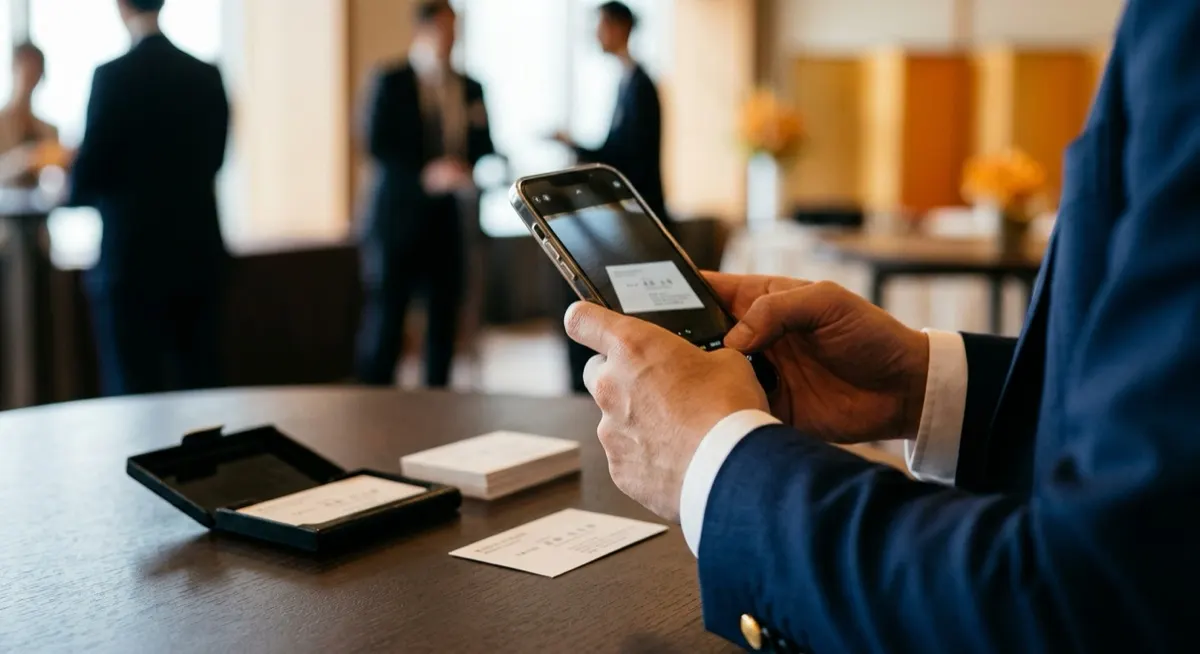
- Eight, from Sansan, is the business-card layer. You scan the physical meishi on the spot; the app maintains the contact and tells you when they change jobs. It is maintenance, not prospecting.
- LINE is the inner circle. Exchanging LINE IDs is the signal that you have moved from vendor to partner. It is not a broadcast or discovery tool.
- Wantedly is culture-first discovery, with a distinctive "casual visit" that gets you inside a company without a formal introduction.
- note.com is where Japanese leaders publish candid strategy, which makes it the best pre-meeting intelligence you can read.
- X/Twitter reaches about 71.2 million in Japan, the platform's second-largest market and its anonymous culture surfaces the industry sentiment other platforms hide.
- LinkedIn is the findability layer, and the whole of the two-way street below.
Underneath all of it, personal introductions, trade shows and industry associations are still how you first meet people. The online stack is the intelligence, follow-up and maintenance layer wrapped around offline discovery, not a replacement for it.
The One Rule: When in Rome, With Flexibility
The entrant carries the adaptation. That splits into two directions, and getting the direction right is half the battle.
Entering Japan (inbound): meet them on their stack. Do not expect your Japanese counterpart on LinkedIn; do the connecting on Facebook, the maintenance on Eight, the inner-circle work on LINE.
Selling into Europe, or engaging Japanese expats already in the EU (outbound): here the flip applies. Be findable on LinkedIn, because the European buyer will look for you there and needs to be able to find your Japanese partner too. But the European side flexes and meets partway, because behavioural change is slow and you cannot expect Japanese professionals to adopt LinkedIn overnight. Building that mutual awareness, on both sides, is exactly what cross-cultural training is for.
The Move Is One Column Left
The single most useful habit is to catch your European reflex and shift it one column toward the Japanese-native move.
| Your instinct | The Japan-native move | Stage |
|---|---|---|
| Cold LinkedIn outreach | Warm intro, trade show, Wantedly casual visit | Discovery |
| LinkedIn connection request | Facebook friend request within ~48h | Connect |
| Cold follow-up email | Messenger thread, referencing the meeting | Follow-up |
| "Let's stay in touch" | Scan the meishi into Eight | Maintain |
| Adding them on LinkedIn | Exchanging LINE IDs, once trust is real | Inner circle |
If you are about to reach for LinkedIn or a cold email, stop and ask which stage you are in. The answer is almost always one column left.
Where the Step-by-Step Lives
This page is deliberately the map, not the manual. Each channel has its own article with the register walkthrough, the etiquette, and the build-or-skip verdict: Facebook, Eight and Sansan, LINE, Wantedly, note.com, X and LinkedIn. Read the map here, then go one level down into whichever channel your next move needs.
If your work runs the other direction, into Europe from Japan or engaging Japanese partners already here, the same two-way-street logic sits inside our comparison of cross-cultural training for Japan: the entrant adapts, and the receiving side flexes to meet them.
Sources and Further Reading
- DataReportal, Digital 2026: Japan
- LY Corporation (LINE / Yahoo Japan)
- Statista: X (Twitter) users by country
- Sansan, Inc.
- Eight, by Sansan, Inc.
- Wantedly, Inc. (English)
- note inc. investor relations
Metric note: DataReportal reports Facebook and X on advertising reach and LinkedIn on total registered members, and states the two are not directly comparable. Where this article compares them, the metrics differ, and the error is conservative: registered members include inactive accounts, so Facebook's lead among active professionals is likely wider than the ratio suggests, not narrower.
Stay Ahead in Cross-Cultural Marketing
Get monthly insights on international growth strategies, cultural intelligence, and digital marketing trends delivered to your inbox.
We respect your privacy. Unsubscribe at any time.