
Why Japanese Business Contracts Are Short
European companies often read a short Japanese contract as naive or risky and try to thicken it with clauses. That misreads the culture. Here is what a Japanese contract is actually for, and how to structure agreements and the close without breaking the relationship.
Part of our Cross-Cultural Leadership series. Start with the full guide: Japanese Business Culture: A Working Guide for Europeans
- A short Japanese contract is a different theory of what a contract is for: a frame for a relationship, not an exhaustive rulebook for its breakdown.
- This rests on a real legal doctrine, not just goodwill: the principle of good faith, imported from German civil law when Japan codified its modern Civil Code, protects the parties' reasonable expectations.
- Thickening the contract with clauses can chill the relationship. A heavy NDA at the first meeting reads as distrust before trust has been built.
- Match the instrument to the stage of trust: MOU or letter of intent first, then a framework agreement, then the full contract once trust is established.
- Expect a bimodal timeline. Most deals run long because consensus is being built quietly; a few close fast because it was already built. Either way, do not push for a quick signature.
- This article explains the cultural meaning of Japanese contracting. It is not legal advice. For the legal mechanics, use qualified counsel and bodies like JETRO and the EU-Japan EPA Helpdesk.
A European company gets the draft contract back from its prospective Japanese partner and the room goes quiet. It is three pages. Where are the indemnities, the termination triggers, the liability caps, the twelve schedules? The instinct is immediate: this is naive, or risky, and we need to thicken it.
That instinct misreads both the culture and, often, the law. And acting on it can chill a relationship just as it is forming.
A note on scope. This article explains the cultural meaning of Japanese contracting, why agreements take the shape they do and how to work with that shape. It is not legal advice. For the legal mechanics of any specific deal, use qualified counsel, and for the trade framework, bodies like JETRO and the EU-Japan EPA Helpdesk.
A short Japanese contract is a different theory of what a contract is for, not a gap to be filled with clauses.
What a Japanese contract is actually for
In much of European and Anglo-American practice, a contract is an exhaustive rulebook for the breakdown of a relationship. It anticipates every way things could go wrong and assigns the consequences in advance. Length signals diligence.
A Japanese contract tends to be the opposite: a frame for a relationship, not a manual for its collapse. The expectation is that good faith and continued dialogue will resolve what the document does not spell out. The relationship, the reputational stakes, and the long time horizon do much of the work that clauses do at home.
This is not loose goodwill. It rests on a real legal doctrine. The principle of good faith was imported from German civil law when Japan codified its modern Civil Code, and it works to protect the contracting parties' reasonable expectations. It can even limit a party's ability to terminate a continuing contract strictly on its written terms. The Japanese word for good faith, shingi, carries within it the word for trust, and trust has been the basic requirement of business conduct in Japan for centuries.
So the short contract is a different answer to the question "what is a contract for?", not a gap to be filled. A heavier document does not automatically make you safer here. It can make you look like you are planning for the breakdown before the relationship has begun.
But isn't Japan highly uncertainty-avoiding?
Here a fair objection arises. Japan scores around 92 on Hofstede's uncertainty-avoidance dimension, one of the highest in the world. High uncertainty avoidance usually predicts the opposite of a short contract: thick rulebooks with every contingency nailed down. Germany, also high on this dimension, does exactly that. So why does high-uncertainty-avoidance Japan accept a three-page agreement?
Because uncertainty avoidance and trust work through different instruments, at different times.
High uncertainty avoidance does not mean "reduce uncertainty with contracts." It means reduce uncertainty, and the instrument is culturally chosen. Rule-based, low-context cultures reduce it in the document, through exhaustive clauses. Relationship-based, high-context Japan reduces it in the relationship and the process: a long courtship, heavy due diligence, references, the internal groundwork of nemawashi, and consensus so that every stakeholder is committed before anyone signs.
So the uncertainty is absorbed before the deal, not by the document after it. By the time a Japanese partner signs, the ambiguity has already been ground down over months of vetting, and the short contract sits on top of already-reduced uncertainty. The slow, cautious entry you meet everywhere else in Japan is the uncertainty avoidance showing up; it is what makes the short contract safe, not a contradiction of it.
And the trust is earned in-relationship assurance, not naive trust in strangers. High uncertainty avoidance is exactly why a Japanese counterpart is slow to trust an unknown foreign firm and insists on the introduction and the references first. What looks like high trust is assurance inside a vetted, long-term relationship where reputation and mutual obligation keep behaviour honest. The caution up front is what earns the trust later. Put simply: Japan does not avoid uncertainty by over-specifying the contract, it avoids it by over-qualifying the partner.
Match the instrument to the stage of trust
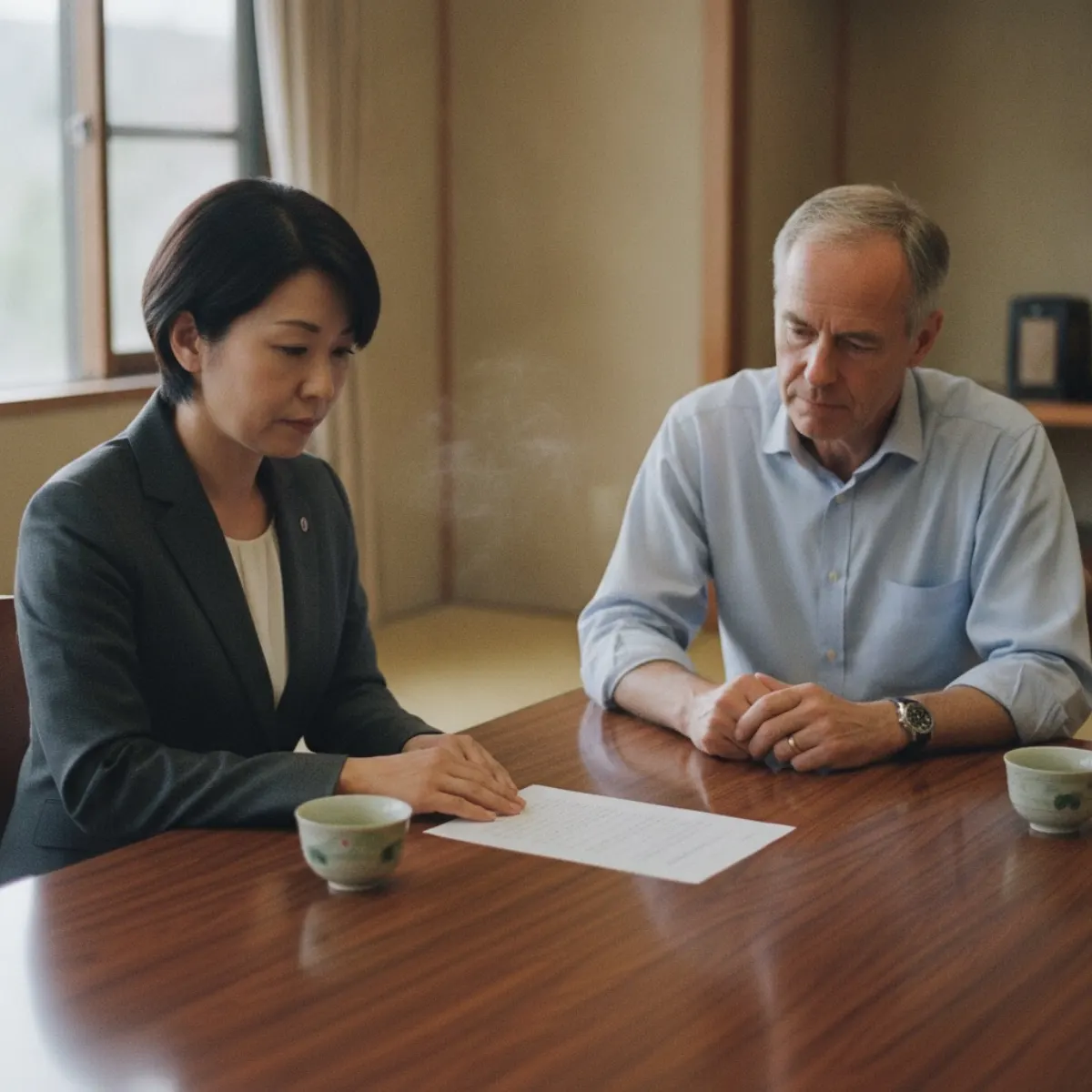
The practical consequence is that the legal instrument should track the state of the relationship, not run ahead of it.
| Stage of trust | Instrument | What it signals |
|---|---|---|
| First contact | A light MOU or letter of intent | Seriousness without presumption |
| Developing | A framework agreement | A direction worth formalising |
| Established | The full contract | A relationship ready to be locked in |
The most common own goal is the heavy NDA at the first meeting. In a relationship-first culture it reads as distrust before any relationship exists, and it can cool the engagement before it starts. There are times a confidentiality agreement is genuinely necessary early; the point is to be aware of the signal it sends and not to lead with the most defensive possible posture by default.
Read the term sheet for its messages, not only its numbers
In Japan, the terms you propose are read as statements about what kind of partner you are. Each line carries a message alongside its commercial content.
- A price stated as "includes the full service package" signals value, rather than an opening bid to be chipped at.
- A volume floor signals that you are planning capacity, which is to say planning to stay.
- Exclusivity is a reward earned as trust grows, not a default to assume on day one.
- A scheduled review point signals partnership rather than a one-off transaction.
None of this changes the legal weight of a clause, which is a question for counsel. It changes how the document is received, and reception matters more here than in markets where the contract and the relationship are kept separate.
The close: expect a bimodal timeline
European teams are often unsettled by how the close behaves in Japan, and it helps to know the pattern in advance.
Expect a bimodal distribution. Most deals run long, because the agreement is being built quietly inside the Japanese organisation before anyone can sign. Two processes are usually running out of your sight: nemawashi, the informal groundwork of explaining the idea and lining up support person by person, and ringi, the circulation of a written proposal through every manager a decision would affect, gathering sign-off as it goes. A minority of deals close surprisingly fast, precisely because that consensus had already been built before the partner ever contacted you.
In both cases the rule is the same: do not try to force the close by asking for the signature. The slow approach is expected, and it is read as seriousness, not weakness. The fastest way to signal that you do not understand the market, and to plant a doubt that outlives the meeting, is to push for a quick yes.
The worked pattern: thicken the contract, chill the deal
Here is the sequence that repeats across European-Japanese deals:
- The Japanese side sends a short, relationship-framed draft.
- The European side reads brevity as risk and returns a long, defensive redraft with extensive termination and liability provisions.
- The Japanese side reads the redraft as a signal that the European partner is already planning for failure and litigation.
- Enthusiasm cools. The relationship, not just the document, becomes harder.
The fix is to keep legal review where it belongs, with your counsel, while being deliberate about what your drafting communicates, not to abandon legal protection. You can protect your interests and still respect the relationship frame: raise substantive concerns through dialogue, stage the instruments to the level of trust, and let the document stay proportionate to where the relationship actually is.
What this looks like done well
The companies that handle this well treat the contract as the start of the relationship, not the finish of the negotiation. They lead with a light instrument, let nemawashi and ringi run on the Japanese side without rushing them, read the term sheet for tone as well as terms, and keep their counsel close for the legal substance without letting a defensive draft do their talking. They are patient at the close because they understand that, in Japan, the signature is the beginning of the work, not the end of it.
Frequently Asked Questions
Does a short contract mean I should skip legal review?
No. Have qualified counsel review any agreement. The cultural point is that you should not assume a short contract is careless, or that unilaterally thickening it makes you safer. Often a defensive redraft costs you more in relationship than it gains you in protection.
Is the good-faith doctrine reliable protection in practice?
The good-faith principle is a genuine and influential feature of Japanese contract culture and law, and it shapes how agreements are honoured and how termination is viewed. How it applies to your specific contract and dispute is a legal question for counsel, not something to rely on from a general article. Treat it as context for why the culture trusts shorter documents, not as a substitute for advice.
How do I protect confidential information without leading with a heavy NDA?
Stage it. Share what is safe to share early, build the relationship, and introduce confidentiality terms as the engagement deepens and genuine sensitive exchange begins. Where early protection is truly necessary, frame it plainly and proportionately rather than presenting a maximally defensive document at first contact. Your counsel can help you find the lightest instrument that still protects what matters.
Sources and further reading
- On the good-faith principle: Shimada (2017), Termination of a Continuous Contract and Good Faith (Keio Law Journal). The good-faith doctrine was imported from German civil law when Japan enacted its modern Civil Code in 1895, and it works to protect the parties' reasonable expectations.
- On nemawashi and ringi: Sagi (2015), The "Ringi System": Decision Making in Japanese Management (International Journal of Management and Humanities). Consensus is built and circulated before the formal decision.
- On the slow, relationship-first approach: Katz, L. (2008), Negotiating International Business: Japan. The slow approach is read as seriousness, not weakness.
- On uncertainty avoidance: Hofstede, G. (2011), Dimensionalizing Cultures: The Hofstede Model in Context (Online Readings in Psychology and Culture); dimension scores via Hofstede Insights / The Culture Factor.
- For the legal mechanics (not covered here): JETRO, the EU-Japan Centre for Industrial Cooperation, and your own counsel.
Related Resources
- Nemawashi: Decision-Making in Japan, the informal groundwork that happens before anyone can sign
- Ringi: The Japanese Approval Process European Sales Teams Keep Missing, how a proposal circulates for sign-off
- Honne and Tatemae: Reading What Japanese Partners Actually Mean, reading the real position behind the polite one
- Persuading Japanese Stakeholders, how to move a decision you cannot see
- Cross-Cultural Training, structured preparation for teams negotiating in Japan
- Expert Network, connect with Japan market specialists for hands-on guidance
Stay Ahead in Cross-Cultural Marketing
Get monthly insights on international growth strategies, cultural intelligence, and digital marketing trends delivered to your inbox.
We respect your privacy. Unsubscribe at any time.