DEI in Japan: A Guide for European Companies
What diversity, equity and inclusion actually look like inside a Japanese workplace, why European DEI frameworks rarely transfer wholesale, and a practical method for building inclusive practice in a Japanese subsidiary that holds up against local reality.
Part of our Cross-Cultural Leadership series. Start with the full guide: Japanese Business Culture: A Working Guide for Europeans
- DEI does not map cleanly from Europe to Japan; the same initiative that works in Amsterdam can stall, misfire, or quietly offend in a Tokyo subsidiary, because the cultural foundations are different
- The single most useful method is to separate the goal (a workplace where capable people contribute regardless of background) from the imported mechanism (the specific European or US programme), then rebuild the mechanism on Japanese terms
- Gender is the sharpest gap: women held 15.9% of section-manager roles and 9.8% of director-level roles in 2024, and Japan ranks 118th of 148 in the WEF Global Gender Gap Report, the lowest in the G7
- Hierarchy, age and seniority are structural in Japan, so European "flatten the hierarchy" inclusion playbooks often work against the grain rather than with it
- Foreign-employee inclusion is its own axis, frequently more urgent for a European subsidiary than any imported diversity category, and usually the one Western DEI templates ignore
- What works is local, quiet and structural: harassment prevention grounded in Japanese workplace norms, sponsorship rather than slogans, and inclusion practices that respect wa (harmony) instead of demanding open confrontation
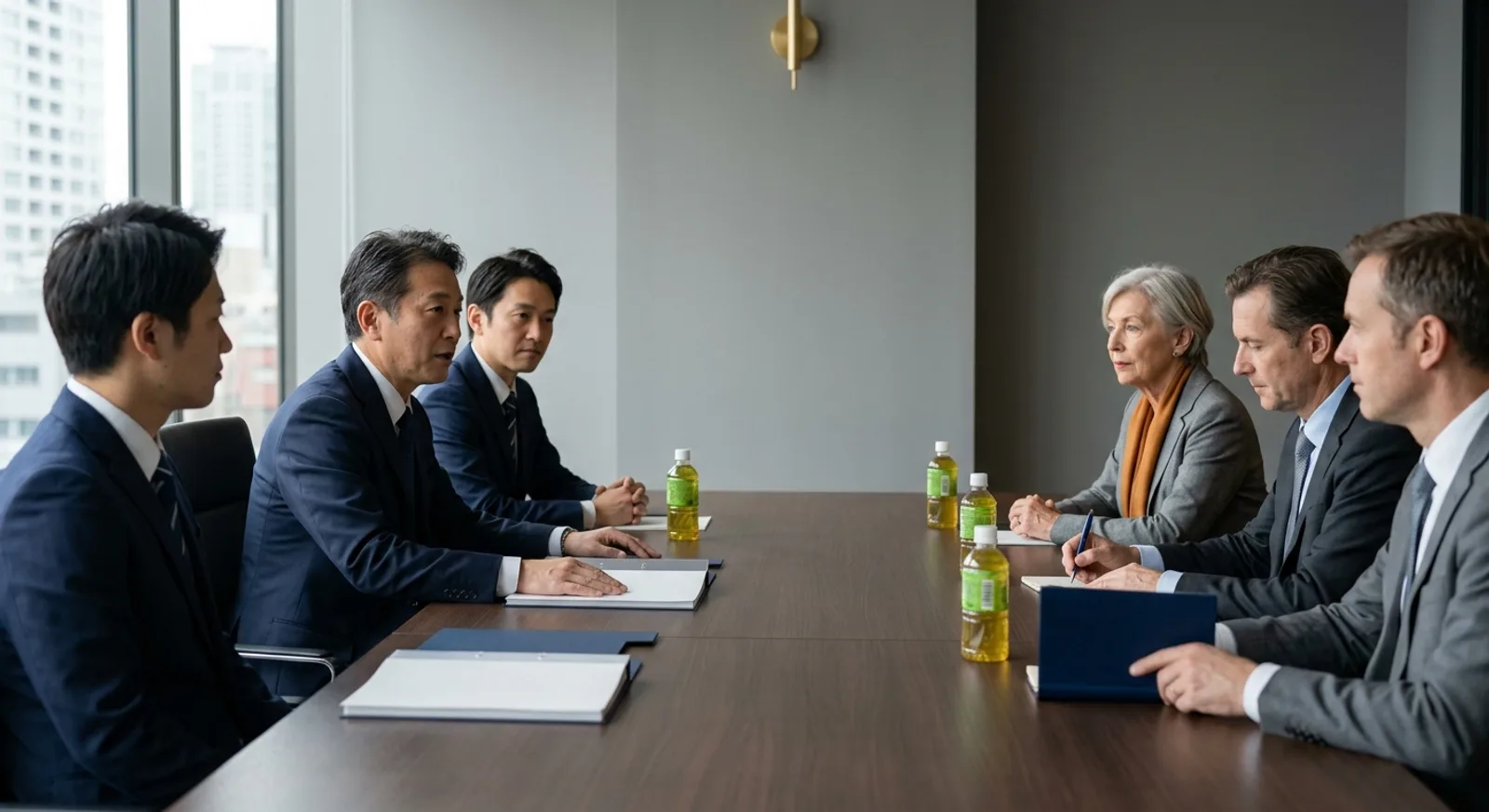
Most European companies arrive in Japan carrying a diversity, equity and inclusion programme that works at home, and assume it will travel. It rarely does, at least not in the form it left in. The deck that lands well in Amsterdam or Munich can stall in a Tokyo subsidiary, not because Japanese colleagues reject the goal, but because the mechanism was built for a different cultural operating system.
This is the mistake worth naming up front: treating DEI as a fixed artefact to deploy rather than an intent to translate. The intent, a workplace where capable people contribute regardless of gender, age, nationality or background, is portable and increasingly urgent in Japan. The mechanism, the specific affinity networks, the public allyship, the blunt unconscious-bias workshop, the identity-first framing, is not. Export the intent. Rebuild the mechanism locally.
This guide is written for European leadership teams setting up or running a Japanese operation. It covers what DEI actually looks like inside a Japanese workplace, where European frameworks break, and a practical method for building inclusive practice that holds up against local reality rather than against a head-office checklist. After more than a decade of cross-cultural growth work between Europe and East Asia, and through work delivered as an EU-Japan Centre for Industrial Cooperation expert, the same pattern repeats: the companies that succeed keep the goal and discard the imported playbook.
A note on scope before we start. This is cultural and commercial guidance, not legal or employment-law advice. Japan has specific statutory obligations around harassment, equal opportunity and, from 2026, pay-gap disclosure. Where this guide touches those, treat it as orientation, and confirm any compliance question with a qualified employment-law professional.
Export the intent. Rebuild the mechanism locally. A DEI programme that works in Amsterdam is an artefact, not a template.
Why European DEI frameworks do not transfer wholesale
European DEI frameworks carry a set of buried assumptions that hold at home and quietly fail in Japan. Surfacing them is the first step, because once you see the assumption you can decide whether to keep it.
The first assumption is a low-power-distance, individualist baseline. Most Western inclusion design asks employees to foreground individual identity, to challenge bias when they see it, and to flatten the gap between junior and senior so that every voice carries equal weight in the room. That is a coherent design in a culture that already leans individualist and egalitarian. Japan does not. In Japanese business culture the respect a person enjoys depends primarily on age, status and rank (Katz, Negotiating International Business: Japan, 2008),1 and the society is a strongly vertical, hierarchical one (Adachi, Cultural Differences in Business Communication, 2010).2 An initiative that asks a junior employee to publicly challenge a senior in the name of inclusion is asking them to break the protocol that keeps their organisation coherent. The result is silent discomfort, not confidence.
The second assumption is that the demographic categories that matter in Europe are the categories that matter in Japan. A European template often centres race-equity, religious accommodation, and broad ethnic diversity, addressing a demographic reality that is central in London or Paris. In most Japanese offices that reality is thin, while the axis that dominates locally, the inclusion of foreign employees, returnees, and women, is the one the imported template barely mentions. You can run a polished race-equity sponsorship programme in a Tokyo subsidiary that has almost no one it was designed for, while the actual inclusion problem, a non-Japanese-speaking hire frozen out when the meeting switches languages, goes unaddressed.
The third assumption is about delivery style. European and US unconscious-bias training often works by surfacing bias openly, naming it, and creating productive discomfort. Japanese communication runs on the opposite default. Indirectness is the norm rather than the exception, anchored in wa (harmony) and face, and in high-context communication a great deal of meaning travels through background rather than explicit statement (Hooker, Cultural Differences in Business Communication, 2012).3 A workshop that names and shames, or that asks people to confess bias in front of colleagues, collides head-on with face. It produces nods, politeness, and zero behaviour change, the same pattern European executives misread in meetings, where, as our guide to Japanese business etiquette for European executives sets out, the surface protocol is itself a form of communication.
None of this means Japanese workplaces are hostile to inclusion. It means the European delivery mechanism is built on three assumptions that do not hold, and shipping it unchanged guarantees friction.
The Hofstede collision: which initiatives translate, which break
A useful way to predict where an initiative will land is to map it against the cultural dimensions that drive the friction. The single most operationally important number is the masculinity-femininity gap. Japan scores 95 on Hofstede's masculinity dimension, the highest in the dataset; the Netherlands scores 14, near the opposite extreme; Germany sits at 66 and France at 43 (dimension scores from Hofstede Insights, theculturefactor.com; framework per Hofstede, Dimensionalizing Cultures: The Hofstede Model in Context, 2011).4 The masculinity dimension refers to the distribution of values between the genders and the cultural emphasis on achievement and competition versus care and quality of life. A gender-inclusion programme designed against a Dutch baseline of 14 is being deployed into a context scoring 95: the cultural distance is enormous, and it explains why gender is both the widest gap and the hardest to move.
Power distance and uncertainty avoidance compound it. Japan's hierarchy is structural, so flat-org inclusion tactics work against the grain. High uncertainty avoidance is a low tolerance for ambiguity, which is not the same thing as an aversion to risk, and the difference decides the tactic: abrupt, high-visibility cultural change is uncomfortable because nobody can see where it lands, not because the stakes are high. Quiet, structural, well-signposted change works better than a launch event, and it works because the signposting is what removes the ambiguity.
Here is how the five most common European DEI initiatives map against that reality.
| EU DEI initiative | Transfers straight, needs adaptation, or breaks | What actually happens in a Japanese subsidiary |
|---|---|---|
| Gender-pay reporting and targets | Adaptation, and increasingly mandatory | Aligns with Japan's own 2026 disclosure law and the 30%-by-2030 target; works as a structural lever, but quota framing imported from Europe can trigger resistance if it bypasses the seniority system |
| Public LGBT+ allyship campaigns | Breaks if copied; adapt to a quieter form | High-visibility campaigns can expose the people they intend to support; privacy norms and indirectness mean structural non-discrimination plus discreet accommodation outperforms visible activism |
| Neurodiversity hiring and accommodation | Transfers, with a communication-design twist | Works well when reframed as making expectations explicit and reducing high-context reliance, which benefits the whole team in a culture that otherwise assumes heavy contextual reading |
| Race-equity sponsorship programmes | Often misfires on relevance | Designed for a demographic mix most Japanese offices do not have; the energy is better redirected to foreign-employee and returnee inclusion, the real local equivalent |
| Religious accommodation policy | Low salience; light-touch only | Rarely a primary axis in a typical Japanese office; a simple, quiet accommodation process is sufficient, an elaborate imported framework reads as solving a problem that is not there |
The pattern is consistent. Initiatives that align with a structural, measurable, hierarchy-respecting change (pay reporting, accommodation processes) transfer with adaptation. Initiatives that rely on high-visibility individual-identity activism (public allyship, identity affinity campaigns) break unless rebuilt in a quieter register. And initiatives aimed at a European demographic reality (race-equity) often need to be redirected toward the axis that is actually live in Japan.
Gender: the widest gap and the most measurable
Of every DEI axis, gender is where the distance between European expectation and Japanese reality is widest, and, helpfully, where the data is clearest.
The headline numbers are stark. Women held 15.9% of section-manager (kacho) positions and 9.8% of managerial and director-level roles in 2024, far short of the government's stated target of 30% of women in leadership by 2030, a target whose original 2020 deadline was missed.5 Japan's gender pay gap sits at roughly 22%, placing it 35th of 36 OECD countries.6 The World Economic Forum's Global Gender Gap Report 2025 ranked Japan 118th of 148 countries, the lowest of any G7 nation.7 These are not figures a European DEI lead can wish away with a poster campaign.
Two things follow for a European company operating there.
First, this is now partly a compliance question, not only a values question. From April 2026, Japanese firms with 101 or more regular employees must disclose their gender pay gap and the share of women in management. For a European subsidiary crossing that headcount, the disclosure requirement is a hard date and a concrete lever: it forces measurement, and measurement is the precondition for any real change. Confirm the exact obligations with an employment-law professional, but plan for them now rather than discovering them at the threshold.
Second, the mechanism matters more here than anywhere else. A European-style gender quota dropped onto a strongly hierarchical, high-masculinity organisation without regard for the seniority system tends to produce backlash and tokenism. What moves the number is sponsorship through the hierarchy: a respected senior leader who visibly backs a capable woman into a stretch role does more than a published target. The seniority system that makes flat-org tactics fail is the same system you can use as a lever, if you work with it. A senior sponsor's endorsement carries weight precisely because hierarchy is structural.
The seniority system that makes flat-org DEI tactics fail is the same system you can use as a lever. Sponsorship through the hierarchy beats a quota imposed across it.
There is also a demographic tailwind worth naming. Japan's working-age population (ages 15 to 64) is projected to fall to 52 million by 2050, a 29.2% decrease versus 2021 (Japan market read, macrotrends). A shrinking labour force is the strongest structural argument for drawing more women, more older workers, and more foreign talent into productive and senior roles, and it is the argument that resonates with Japanese management far more than an imported moral frame. Frame inclusion as a response to the talent shortage and you are speaking the language the business already understands.
Hierarchy, age and seniority as an inclusion axis
In Europe, age and seniority are rarely treated as a primary diversity dimension; the conversation centres on gender, race, disability and sexual orientation. In Japan, age and seniority are arguably the organising dimension of the entire workplace, and any inclusion work that ignores them will misfire.
The senpai-kohai (senior-junior) relationship and the broad correlation of age with status mean that "give junior voices equal weight in the room" reads very differently in Tokyo than in Rotterdam. Junior input is welcome; the channel for it is different. Junior staff shape decisions through nemawashi (the informal pre-meeting consultation that drives how Japanese companies actually make decisions) and contribute technical input that flows upward through the consensus process, not through open challenge in the meeting itself. A European inclusion programme that measures success by how often junior people speak up in meetings is measuring the wrong thing.
This has two practical consequences for inclusion design.
First, do not import a flat-hierarchy ideal as the definition of inclusion. Japan is a remarkable exception in cross-cultural research: although strongly hierarchical, it is one of the most consensual decision-making cultures in the world (Meyer, The Culture Map, 2014).8 Inclusion in that system means ensuring every relevant voice is consulted in the process, not that every voice contends openly in the room. If you want junior, female, or foreign perspectives to count, build them into the nemawashi loop, do not stage a town hall and call it inclusion.
Second, use seniority as the transmission mechanism for change. Because respect tracks age, status and rank, a change endorsed by the senior layer propagates; a change pushed against the senior layer stalls. This is the opposite of some European change-management instincts, which start with grassroots energy. In Japan, secure visible senior sponsorship first, then let it cascade.
Foreign-employee inclusion: the axis Western templates forget
For most European subsidiaries, the most consequential inclusion axis is not on the standard DEI menu at all: the inclusion of foreign and mixed-nationality staff, including non-Japanese hires, returnees, and the European team itself.
The friction here is well documented. Research on Japanese managers and teams operating across the Japan-Europe boundary identifies recurring obstacles: the occasional switch to the local or Japanese language in meetings, which excludes those who do not speak it, and a parent-company head office with an insufficient understanding of the local situation (Fujio, 2018).9 Layer on the career-ceiling perception many foreign professionals report, and the often opaque promotion logic, and you have a genuine inclusion problem that no race-equity slide deck will touch.
The good news is that this axis is unusually tractable, because the levers are concrete.
- 1
Decide the working language deliberately
Do not let it drift. Choose the meeting language explicitly per context, and if Japanese is used, ensure non-speakers are not silently excluded; provide summaries or interpretation rather than leaving people guessing.
- 2
Make promotion paths legible
Foreign staff often cannot see how advancement works. Document the criteria, the timeline, and who decides, so a non-Japanese employee can find their way through a system that locals absorb implicitly.
- 3
Bridge the local team and headquarters
A European head office that under-understands Japan is itself an inclusion failure. Build a deliberate translation layer so the local team is heard upward and the parent-company context flows downward.
- 4
Pair newcomers with cultural sponsors
Assign each foreign hire a Japanese colleague who explains the unwritten rules, the same nemawashi-style relationship work that drives every other outcome in a Japanese organisation.
- 5
Measure inclusion as retention and progression
Track whether foreign and mixed-nationality staff stay and advance at rates comparable to local hires. That number, not attendance at a diversity event, tells you whether inclusion is real.
This is the inclusion work that pays off fastest for a European company, and it is almost entirely within your control. It also happens to be the work that a generic, US-coded DEI programme will overlook, because it was never designed for a subsidiary whose minority is the foreign team.
Harassment prevention done the Japanese way
Harassment prevention is where a directly translated European policy does the most damage, because it both over-reaches and under-reaches at the same time.
Japan has its own well-established harassment vocabulary in everyday workplace use, including sekuhara (sexual harassment) and pawahara (power harassment), among others. The categories, the social expectations, and the threshold for what counts differ from European norms. A behaviour that is squarely a violation in a European policy may be read differently in Japan, and, more importantly, a locally salient form of harassment, particularly pawahara, the abuse of hierarchical power, may not be captured at all by a policy drafted for a European office. Uploading the home-country handbook therefore misses the local reality in both directions.
Effective prevention in Japan rests on three things that a policy document alone cannot deliver.
It rests on a reporting channel that fits how Japanese employees actually raise concerns. In a high-context, harmony-preserving culture, the anonymous hotline that European compliance teams favour is often under-used, because raising a concern through an impersonal channel feels exposed and disruptive. Concerns more often travel privately, through a trusted intermediary. A prevention system that offers a discreet, relationship-based route alongside the formal one captures problems the hotline never hears.
It rests on senior endorsement rather than published rules. Because the hierarchy is structural, a standard that the senior layer visibly owns carries weight; a rulebook circulated by HR without that backing does not. Culture beats the policy document. The most effective harassment-prevention work makes the senior team the visible owners of the standard.
And it rests on training calibrated to indirect communication. A confrontational European-style workshop that asks people to role-play calling out a senior will not produce that behaviour in a Japanese office; it will produce polite paralysis. Training that works teaches the locally viable moves: how to raise a concern through the right channel, what the standard actually is, and how managers should respond, all in a register that respects face.
Again, the legal dimension is real, statutory harassment-prevention obligations exist and have tightened, and this guide does not substitute for advice from a qualified employment-law professional. The point here is cultural: the policy is necessary and nowhere near sufficient. The culture around it is what prevents harassment.
What works: a method for building inclusive practice in Japan
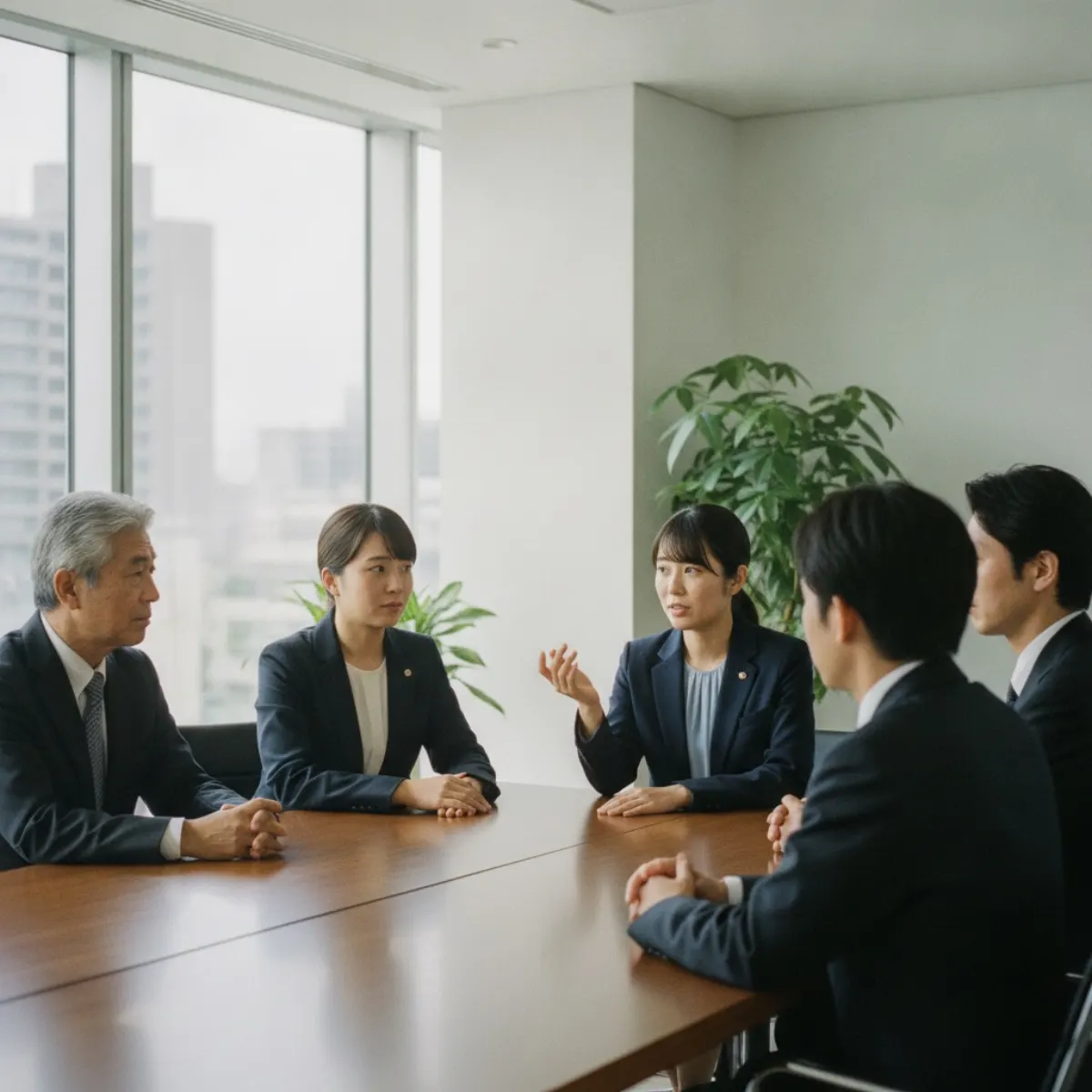
Pulling the threads together, here is the working method we use with European teams building inclusive practice in a Japanese operation. It is deliberately a sequence for translating intent into locally viable practice.
- 1
Separate the goal from the imported mechanism
Write down what you actually want, capable people contributing regardless of background, then set aside the specific European or US programme. The goal travels; the programme is a candidate, not a given.
- 2
Diagnose the local axes that matter
For most European subsidiaries the live axes are foreign-employee inclusion, gender, and age/seniority, not the race-and-religion mix a home-country template assumes. Map your actual workforce before choosing initiatives.
- 3
Map each initiative against the cultural grain
Use the collision matrix: does the initiative align with structure and hierarchy, or rely on high-visibility individual activism? Keep the former, rebuild the latter, redirect the irrelevant.
- 4
Secure senior sponsorship first
Because respect tracks rank, change endorsed by the senior layer propagates and change pushed against it stalls. Get visible senior ownership before launching anything.
- 5
Deliver in a register that respects wa and face
Replace name-and-shame workshops and public campaigns with structural standards, discreet processes, and training that fits indirect communication. Quiet and durable beats loud and brittle.
- 6
Measure structurally, not theatrically
Track pay-gap disclosure, the share of women and foreign staff in management, and the retention and progression of under-represented groups, not attendance at events. The numbers Japan now requires are the right ones to manage to.
Two principles run through the whole sequence. The first is that inclusion in Japan is structural rather than performative: it shows up in who gets promoted, who is consulted in nemawashi, and who stays, far more than in visible campaigns. The second is that the hierarchy and harmony norms that make European tactics fail are also the levers that make local practice work, if you stop fighting them and start using them.
How to choose a DEI or inclusion training programme for Japan
If you are evaluating external training to support this work, the market is full of two unhelpful extremes: US-default DEI vendors who will ship the same identity-first curriculum they run everywhere, and generic Japan-etiquette providers who do not touch inclusion at all. A vendor-agnostic checklist helps you find the rare provider that actually fits.
- 1
Does it start from your baseline, not a US default?
A programme calibrated to a Dutch, German or French starting point will land differently from one written for a US head office. Ask whether the delta from your home culture is part of the design.
- 2
Does it address foreign-employee inclusion?
If the curriculum only covers gender, race and LGBT+ and never mentions the inclusion of your own foreign team or non-Japanese hires, it was not built for a European subsidiary in Japan.
- 3
Does it work with the hierarchy?
Reject any approach whose core move is flattening the hierarchy or staging open challenge. Look for one that uses senior sponsorship as the transmission mechanism.
- 4
Is the delivery register Japan-appropriate?
Confrontational bias workshops fail here. The right programme teaches locally viable moves in a register that respects face and indirect communication.
- 5
Does it connect to the 2026 disclosure reality?
A serious provider will help you turn the pay-gap and management-share disclosure requirement into a measurement and improvement plan, not just a compliance box.
- 6
Does it stay in cultural and commercial scope?
Inclusion training is not legal advice. A credible provider will tell you to confirm statutory obligations with an employment-law professional rather than blurring the line.
The goal of the checklist is to find the partner who will translate your inclusion intent into practice your Japanese colleagues can actually live with, which is the whole job.
The bottom line
DEI does not fail in Japan because Japanese workplaces reject the goal. It fails when European companies import the mechanism wholesale and assume the cultural operating system underneath is the same. It is different. Hierarchy is structural, communication is indirect, harmony and face govern how concerns surface, and the demographic axes that matter, gender, age and seniority, and above all the inclusion of foreign staff, are not the ones a home-country template centres.
The companies that build genuine inclusion in Japan do the same thing every time. They keep the goal and discard the playbook. They diagnose the axes that are actually live in their operation. They map each initiative against the cultural grain, keep what aligns, rebuild what relies on high-visibility activism, and redirect what was designed for a demographic reality that is not theirs. They secure senior sponsorship before launching, deliver in a register that respects wa, and measure structurally, using the very numbers Japan now requires.
Get that right and inclusion stops being a head-office artefact you are trying to install against resistance, and becomes something the business does because it works: in a shrinking labour market, drawing on the full capability of women, older workers and foreign talent is how a European company in Japan stays competitive.
How to prepare a European team
Reading a guide is necessary but not sufficient, because inclusion practice only sticks when a team has rebuilt it against its own cultural defaults and the local reality. The working method we use with European teams has three parts:
- Baseline and diagnose. Identify the team's home-country defaults, the buried assumptions in its existing DEI programme, and the inclusion axes that are actually live in the Japan operation.
- Translate, do not transplant. Map each initiative against the cultural grain, keep what aligns, rebuild what relies on visible activism into a structural form, and redirect what was designed for the wrong demographic reality.
- Sponsor and measure. Secure senior ownership before launch, and set up structural measurement, pay-gap disclosure, management-share, retention and progression, so you manage to the numbers that matter rather than to event attendance.
This is the substance of Silkdrive's cross-cultural training for European teams and our broader intercultural training programmes. For teams whose inclusion work sits inside a wider entry, see our Japan market entry guide for European companies. For the dedicated commercial programme, see our DEI and inclusion training for Japan.
This guide is written by Patric Sawada, founder of Silkdrive and an EU-Japan Centre for Industrial Cooperation expert, drawing on more than a decade of cross-cultural growth work between Europe and East Asia. It is cultural and commercial guidance, not legal or employment-law advice; specific statutory obligations should be confirmed with a qualified professional. The cultural claims are anchored to peer-reviewed and institutional sources, and the gender-equality figures to current government and intergovernmental data.
References
-
Katz, L. (2008). Negotiating International Business: Japan. On respect deriving from age, status and rank. ↩
-
Adachi, N. (2010). Cultural Differences in Business Communication. On Japan as a strongly vertical (hierarchical) society and indirectness as the communication default. ↩
-
Hooker, J. (2012). Cultural Differences in Business Communication. On high-context communication and the role of background information. ↩
-
Hofstede, G. (2011). Dimensionalizing Cultures: The Hofstede Model in Context. Online Readings in Psychology and Culture. Dimension scores (masculinity: Japan 95, Netherlands 14, Germany 66, France 43) referenced from Hofstede Insights (https://www.theculturefactor.com/country-comparison-tool). ↩
-
Japanese government data (2024). Women held 15.9% of section-manager positions and 9.8% of managerial and director-level roles; the 30%-in-leadership target set for 2030 (original 2020 deadline missed); pay-gap and management-share disclosure required from April 2026 for firms with 101 or more regular employees. ↩
-
OECD (2024-2025). Japan gender pay gap of approximately 22%, ranking 35th of 36 OECD countries. ↩
-
World Economic Forum (2025). Global Gender Gap Report 2025. Japan ranked 118th of 148 countries, the lowest in the G7. ↩
-
Meyer, E. (2014). The Culture Map: Breaking Through the Invisible Boundaries of Global Business. PublicAffairs. On Japan as the strongly-hierarchical-yet-consensual exception. ↩
-
Fujio, M. (2018). On obstacles for Japanese managers and teams operating across the Japan-Europe boundary: in-meeting language switching and headquarters' insufficient understanding of the local situation. ↩
Stay Ahead in Cross-Cultural Marketing
Get monthly insights on international growth strategies, cultural intelligence, and digital marketing trends delivered to your inbox.
We respect your privacy. Unsubscribe at any time.